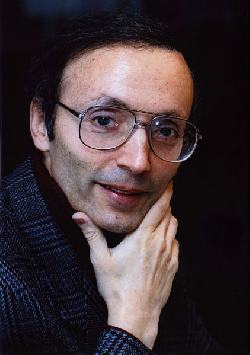
Enoch Powell Part 8
British politician
- Life
- 16 June 1912 - 8 February 1998
- Birthday
- June 16
- Length
- 24 parts
When Thatcher was challenged by Michael Heseltine for the leadership of the Conservative Party during November 1990, Powell said he would rejoin the party, which he had left in February 1974 over the issue of Europe, if Thatcher won, and would urge the public to support both her and, in Powell's view, national independence. He wrote to one of Thatcher's supporters, Norman Tebbit, on 16 November, telling him Thatcher was entitled to use his name and his support in any way she saw fit. Since she resigned on 22 November, Powell never rejoined the Conservatives. Powell wrote the following Sunday: "Good news is seldom so good, nor bad news so bad, as at first sight it appears".
Her downfall was due to having so few like-minded people on European integration amongst her colleagues and that as she had adopted a line that would improve her party's popularity, it was foolish of them to force her out. However he added, "The battle has been lost, but not the war. The fact abides that, outside the magic circle at the top, a deep rooted opposition has been disclosed in Britain to surrendering to others the right to make our laws, fix our taxes, or decide our policies. Running deep beneath the overlay of years of indifference is still the attachment of the British public to their tradition of democracy. Their resentment on learning that their own decisions can be overruled from outside remains as obstinate as ever". Thatcher had relit the flame of independence and "what has happened once can happen again... sooner or later those who aspire to govern... will have to listen".
In December 1991, Powell claimed that "Whether Yugoslavia dissolves into two states or half a dozen states or does not dissolve at all makes no difference to the safety and well being of the United Kingdom". Britain's national interests determined that the country should have "a foreign policy which befits the sole insular and oceanic state in Europe". During the 1992 general election Powell spoke for Nicholas Budgen in his old seat of Wolverhampton South West UK Parliament constituency. He praised Budgen for his opposition to the Maastricht Treaty and condemned the rest of the Conservative Party for supporting it.
Old age and death
In the autumn of 1992, at 80, Powell was diagnosed with Parkinson's disease. In 1994, he published The Evolution of the Gospel, A New Translation of the First Gospel with Commentary and Introductory Essay. On 5 November, the European printed an article by Powell in which he said he did not expect the European Communities Act 1972 to be amended or repealed but added, "Still, something has happened. There has been an explosion. Politicians, political parties, the public itself have looked into the abyss... the British people, somehow or other, will not be parted from their right to govern themselves in parliament". The next year, twenty-fifth anniversary of Powell's "Rivers of Blood" speech, Powell wrote an article for The Times, in which he claimed the concentration of immigrant communities in inner cities would lead to "communalism", which would have grave effects on the electoral system: "communalism and democracy, as the experience of India demonstrates, are incompatible". In May he spoke for Alan Sked of the Anti-Federalist League (the forerunner of the United Kingdom Independence Party) who was standing at the Newbury by-election. Sked went on to lose his deposit in the by-election, polling only 601 votes (1.0%). At Michael Portillo's fortieth birthday party the same month, Thatcher greeted him enthusiastically and asked him: "Enoch, I haven't seen you since your eightieth-birthday dinner. How are you?" Powell replied, "I'm eighty-one". Powell's opinion of Thatcher had declined after she endorsed John Major at the 1992 election, which he believed to be a repudiation of her fight against European integration after the Bruges speech.
On 16 May 1994, Powell spoke at the Bruges Group and said Europe had "destroyed one Prime Minister and will destroy another Prime Minister yet" and demanded powers surrendered to the European Court of Justice to be repatriated. In June, he wrote an article for the Daily Mail, where he stated that "Britain is waking from the nightmare of being part of the continental bloc, to rediscover that these offshore islands belong to the outside world and lie open to its oceans". Innovations in contemporary society did not worry him: "When exploration has run its course, we shall revert to the normal type of living to which nature and instinct predispose us. the decline will not have been permanent. The deterioration will not have been irreversible".
Continue reading: part 9 of 24 →