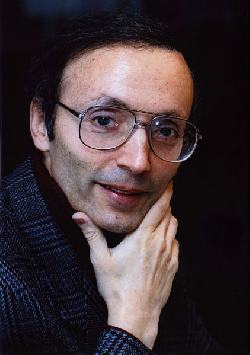
Enoch Powell Part 6
British politician
- Life
- 16 June 1912 - 8 February 1998
- Birthday
- June 16
- Length
- 24 parts
In another letter to his parents in June 1939, before the beginning of war, Powell wrote: "It is the English, not their Government; for if they were not blind cowards, they would lynch Chamberlain and Halifax and all the other smarmy traitors". At the outbreak of war, Powell immediately returned to Britain, but not before buying a Russian dictionary, since he thought "Russia would hold the key to our survival and victory, as it had in 1812 and 1916".
Portraits
Powell sat for sculptor Alan Thornhill for a portrait in clay. The correspondence file relating to the Powell portrait bust is held as part of the Thornhill Papers (2006:56) in the archive of the Henry Moore Foundation's Henry Moore Institute in Leeds and the terracotta remains in the collection of the artist.
There are 24 images of Powell in the National Portrait Gallery Collection including work by Bassano's studios and Anne-Katrin Purkiss.
The National Portrait Gallery collection includes a 1971 cartoon by Gerald Scarfe.
Post-parliamentary life
1987–92
Powell was critical of the Special Air Service (SAS) shootings of three unarmed IRA members in Gibraltar in March 1988.
Powell claimed in an article for The Guardian on 7 December 1988 that the new Western-friendly foreign policy of Russia under Mikhail Gorbachev heralded "the death and burial of the American empire". Chancellor Helmut Kohl of West Germany had decided to visit Moscow to negotiate German reunification, signalling to Powell that the last gasp of American power in Europe to be replaced by a new balance of power not resting on military force but on the "recognition of the restraints which the ultimate certainty of failure places upon the ambitions of the respective national states. In an interview for the Sunday People the same month, he claimed the Conservative Party was "rejoining Enoch" on the European Community but repeated his warning of civil war as the consequence of immigration: "I still cannot forsee how a country can be peaceably governed in which the composition of the population is progressively going to change. I am talking about violence on a scale which can only be described as civil war. I cannot see there can be any other outcome". It would not be a race war but "about people who revolt against being trapped in a situation where they feel at the mercy of a built-in racial majority, whatever its colour" and claimed that the government had made contingency plans for such an event. The solution he claimed was repatriation on a large scale and the cost of doing this in welfare payments and pensions was well worth paying.
In spring 1989, he made a programme (broadcast in July) on his visit to Russia and his impressions on that country. The BBC originally wanted him to do a programme on India but the Indian high commission in London refused him a visa. When he visited Russia, Powell went to the graves of 600,000 people who died during the siege of Leningrad and saying that he could not believe a people who had suffered so much would willingly start another war. He also went to a veterans' parade (wearing his own medals) and talked with Russian soldiers with the aid of an interpreter. However, the programme was criticised by those who believed that Powell had dismissed the Soviet Union's threat to the West since 1945 and that he had been too impressed with Russia's sense of national identity. When German reunification was on the agenda in summer 1989, Powell claimed that Britain urgently needed to create an alliance with the Soviet Union in view of Germany's effect on the balance of power in Europe.
After Thatcher's Bruges speech in September 1988 and her increasing hostility to a European currency in the last years of her premiership, Powell made many speeches publicly supporting her attitude to Europe. When Heath attacked Thatcher's speech in May 1989 Powell called him "the old virtuoso of the U-turn". When inflation crept up that year, he condemned the Chancellor Nigel Lawson's policy of printing money so sterling would shadow the German deutschmark and said that it was for the UK to join the European Monetary System.
Continue reading: part 7 of 24 →