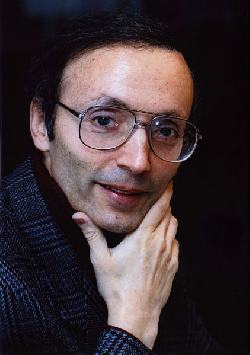
Enoch Powell
British politician
- Life
- 16 June 1912 - 8 February 1998
- Birthday
- June 16
- Length
- 24 parts
John Enoch Powell, MBE ( 16 June 1912 – 8 February 1998) was a British politician, classical scholar, poet, writer, linguist and soldier. He served as a Conservative Party Member of Parliament (MP) (1950–74), Ulster Unionist Party (UUP) MP (1974–1987), and Minister of Health (1960–63). He attained most prominence in 1968, when he made a controversial speech on immigration, now widely referred to as the "Rivers of Blood" speech. In response, he was dismissed from his position as Shadow Defence Secretary (1965–68) in the Shadow Cabinet of Edward Heath. He had few friends in the establishment. Michael Heseltine condemned the Rivers of Blood speech as having a "racist tone" and of being an "explosion of bigotry”. Thirty years later Heath commented that Powell's remarks on the "economic burden of immigration" had been "not without prescience."Christopher Sandford: "To See and to Speak", Chronicles: A Magazine of American Culture, June 2012.
A poll at the time suggested that 74% of the UK population agreed with Powell's opinions and his supporters claim that this large public following that Powell attracted helped the Conservatives to win the 1970 general election, and perhaps cost them the February 1974 general election, at which Powell turned his back on the Conservatives by endorsing a vote for Labour, who returned as a minority government in early March following a hung parliament. He returned to the House of Commons in October 1974 as the Ulster Unionist Party MP for the Northern Irish constituency of South Down until he was defeated in the 1987 general election.
Before entering politics, he had been a classical scholar, becoming a full Professor of Ancient Greek at the age of 25. During the Second World War, he served in both staff and intelligence positions, reaching the rank of brigadier in his early thirties. He also wrote poetry, his first works being published in 1937, as well as many books on classical and political subjects.
1960s
Leadership elections
Along with Iain Macleod, Powell refused to serve in the Cabinet following the appointment of Alec Douglas-Home as Prime Minister. This refusal was not based on antipathy to Douglas-Home personally but was in protest at what Macleod and Powell saw as Macmillan's underhand manipulation of colleagues during the process of choosing a new leader.
During the 1964 general election, Powell said in his election address, "it was essential, for the sake not only of our own people but of the immigrants themselves, to introduce control over the numbers allowed in. I am convinced that strict control must continue if we are to avoid the evils of a "colour question" in this country, for ourselves and for our children". Norman Fowler, then a reporter for The Times, interviewed Powell during the election and asked him what the biggest issue was: "I expected to be told something about the cost of living but not a bit of it. "Immigration," replied Powell. I duly phoned in my piece but it was never used. After all, who in 1964 had ever heard of a former Conservative cabinet minister thinking that immigration was an important political issue?"
Following the Conservatives' defeat in the election, he agreed to return to the front bench as Transport Spokesman. In July 1965, he stood in the first-ever party leadership election but came a distant third to Edward Heath, obtaining only 15 votes, just below the result Hugh Fraser would gain in the 1975 contest. Heath appointed him Shadow Secretary of State for Defence.
Shadow Defence Secretary
In his first speech to the Conservative Party conference as Shadow Secretary of State for Defence on 14 October 1965, Powell outlined a fresh defence policy, jettisoning what he saw as outdated global military commitments left over from Britain's imperial past and stressing that Britain was a European power and therefore an alliance with Western European states from possible attack from the East was central to Britain's safety. He defended Britain's nuclear weapons and argued that it was "the merest casuistry to argue that if the weapon and the means of using it are purchased in part, or even altogether, from another nation, therefore the independent right to use it has no reality. With a weapon so catastrophic, it is possession and the right to use which count".Enoch Powell, Freedom and Reality (Eliot Right Way Books, 1969), p. 224. Also, Powell called into question Western military commitments East of Suez:
Continue reading: part 2 of 24 →