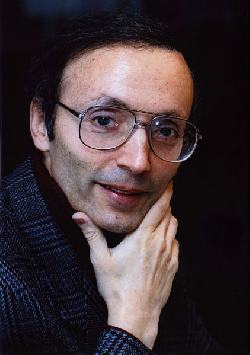
Enoch Powell Part 15
British politician
- Life
- 16 June 1912 - 8 February 1998
- Birthday
- June 16
- Length
- 24 parts
During 1972, the same year he again spoke publicly of his opposition to the immigration of Ugandan Asians, Powell was also defeated in his struggle against the European Communities Bill, which helped prepare the UK to join the common market, which he had spent three years campaigning to prevent from happening.
However, on 23 February 1974 (with a general election five days away), Powell turned his back on the Conservative Party, mainly because it had taken the UK into the EEC and because it abandoned its manifesto commitments so he could not advocate it at the election. Monetarist economist Milton Friedman sent Powell a letter praising him as principled. Powell had his friend, Andrew Alexander, talk with Labour Party leader Harold Wilson's press secretary, Joe Haines, on Powell's timing of his speeches against Heath. Powell had been talking with Wilson irregularly since June 1973 during chance meetings in the gentlemen's toilets of the aye lobby in the House of Commons. Wilson and Haines had ensured that Powell would dominate the newspapers of the Sunday and Monday before election day by having no Labour frontbencher give a major speech on 23 February, the day of Powell's speech. Powell gave this speech at the Mecca Dance Hall in the Bull Ring, Birmingham to an audience of 1,500, with some press reports estimating that 7,000 had to be turned away. Powell said the issue of British membership of the EEC was one where "if there be a conflict between the call of country and that of party, the call of country must come first":
Powell went on to criticise the Conservative Party for obtaining British membership despite promising at the general election that they would "negotiate: no more, no less" and that Britain needed "the full-hearted consent of Parliament and people" if Britain were to join. He also denounced Heath for accusing his political opponents of lacking respect for Parliament whilst being "the first Prime Minister in three hundred years who entertained, let alone executed, the intention of depriving Parliament of its sole right to make the laws and impose the taxes of this country". He then advocated a vote for the Labour Party:
This call to vote Labour surprised some of Powell's supporters who were more concerned with beating socialism than the supposed loss of national independence. On 25 February, he made another speech at Shipley and urged a vote for Labour and saying he did not believe the claim that Wilson would renege his commitment to renegotiation, which Powell believed was ironic because of Heath's premiership: "In acrobatics Harold Wilson, for all his nimbleness and skill, is simply no match for the breathtaking, thoroughgoing efficiency of the present Prime Minister". At this moment a heckler shouted "Judas!" Powell responded: "Judas was paid! Judas was paid! I am making a sacrifice!" Later in the speech Powell said, "I was born a Tory, am a Tory and shall die a Tory. It is part of me... it is something I cannot alter". In 1987, Powell said there was no contradiction between urging people to vote Labour whilst proclaiming to be a Tory: "Many Labour members are quite good Tories".
Powell, in an interview on 26 February, said he would be voting for Helene Middleweek, the Labour candidate, rather than the Conservative Nicholas Budgen. Powell did not stay up on election night to watch the results on television and when on 1 March Powell picked up his copy of The Times from his letterbox and saw the headline "Mr Heath's general election gamble fails", he reacted by singing the Te Deum. He later said: "I had had my revenge on the man who had destroyed the self-government of the United Kingdom". The election result was a "hung parliament". Although the Tories had won the most votes, Labour finished five seats ahead of the Conservatives. The national swing to Labour was 1%; 4% in Powell's heartland, the West Midlands conurbation; and 16% in his old constituency (although Budgen won the seat). According to Telegraph journalist Simon Heffer, both Powell and Heath believed that Powell was responsible for the Conservatives' losing the election.
Continue reading: part 16 of 24 →