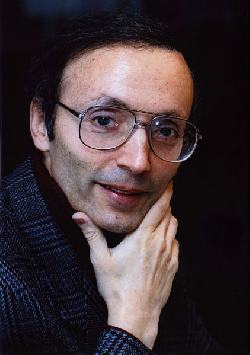
Enoch Powell Part 16
British politician
- Life
- 16 June 1912 - 8 February 1998
- Birthday
- June 16
- Length
- 24 parts
Writings
- The Rendel Harris Papyri (1936).
- First Poems (1937).
- A Lexicon to Herodotus (1938).
- The History of Herodotus (1939).
- Casting-off, and other poems (1939).
- Herodotus, Book VIII (1939).
- Llyfr Blegywryd (1942) Stephen J. Williams, J. Enoch Powell, ed.
- Thucydidis Historia (1942).
- .
- One Nation (1950, jointly [with?]).
- .
- The Social Services, Needs and Means (1952).
- Change is our Ally (1954).
- .
- Great Parliamentary Occasions (1960).
- Saving in a Free Society (1960).
- A Nation not Afraid (1965).
- .
- .
- . Includes the text of the "Rivers of Blood" speech.
- Common Market: The Case Against (1971).
- Still to Decide (1972), Kingswood, ISBN 0-7160-0566-2.
- Common Market: Renegotiate or Come Out (1973).
- No Easy Answers (1973), London, ISBN 0-85969-001-6.
- Wrestling With the Angel (1977), London, ISBN 0-85969-127-6.
- Joseph Chamberlain (1977) , London, ISBN 0-500-01185-0.
- .
- .
- .
- Collected Poems (1990).
- The Evolution of the Gospel (1994).
Early years and education
Powell was born in Stechford, Birmingham, England. He lived there for the first six years of his life before moving to King's Norton in 1918, where he lived until 1930. He was the only child of Albert Enoch Powell (1872–1956), a primary school headmaster, and his wife, Ellen Mary (1886–1953). Ellen was the daughter of Henry Breese, a Liverpool policeman and his wife Eliza, who had given up her own teaching career after marrying. The Powells were of Welsh descent, having moved to the developing Black Country during the early 19th century. His great-grandfather was a coal miner, and his grandfather had been employed in the iron trade..
Powell was a pupil at King's Norton Boys' School before moving to King Edward's School, Birmingham, where he studied classics (which would later influence his 'Rivers of Blood' speech), and was one of the few pupils in the school's history to attain 100% in an end-of-year English examination. He studied at Trinity College, Cambridge, from 1930 to 1933, during which time he fell under the influence both of the poet A. E. Housman, then Professor of Latin at the university, and of the writings of the German philosopher Friedrich Nietzsche. He took no part in politics at university.
It was while at Cambridge that Powell is recorded as having enjoyed one of his first close relationships. Indeed, according to John Evans, Chaplain of Trinity and Extra Preacher to the Queen, instructions were left with him to reveal after Powell's death that at least one of the romantic affairs of his life had been homosexual. Powell had particularly drawn the Chaplain's attention to lines in his First Poems (published 1937). Biographers such as Simon Heffer dispute this and have argued that this did not mean that he was homosexual; merely that he had not yet met any girls.
While at University, in one Greek prose examination lasting three hours, he was asked to translate a passage into Greek. Powell walked out after one and a half hours, having produced translations in the styles of Plato and Thucydides. For his efforts, he was awarded a double starred first in Latin and Greek, this grade being the best possible and extremely rare. As well as his education at Cambridge, Powell took a course in Urdu at the School of Oriental Studies, now the School of Oriental and African Studies, University of London, because he felt that his long-cherished ambition of becoming Viceroy of India would be unattainable without knowledge of an Indian language.
Personal life
On 2 January 1952, the 39-year-old Powell married 26-year-old Margaret Pamela Wilson, a former colleague from the Conservative Central Office, who provided him with the settled and happy family life that was essential to his political career. They had two daughters, born in January 1954 and October 1956.
Continue reading: part 17 of 24 →