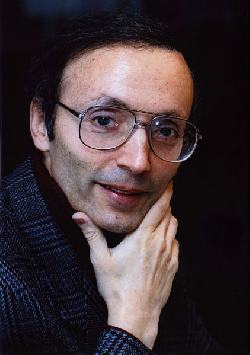
Enoch Powell Part 11
British politician
- Life
- 16 June 1912 - 8 February 1998
- Birthday
- June 16
- Length
- 24 parts
Denis Healey, a member of parliament from 1952 to 1992, later said this speech was "the greatest parliamentary speech I ever heard... it had all the moral passion and rhetorical force of Demosthenes". The Daily Telegraph report of the speech said that "as Mr Powell sat down, he put his hand across his eyes. His emotion was justified, for he had made a great and sincere speech".
Minister of Health
Powell returned to the government in July 1960, when he was appointed Health minister, albeit outside the Cabinet, but this changed in 1962. During a meeting with parents of babies that had been born with deformities caused by the drug thalidomide, he was unsympathetic to the victims, refusing to meet any babies deformed by the drug and saying that "anyone who took so much as an aspirin put himself at risk." Powell also refused to launch a public inquiry, resisted calls to issue a warning against any left-over thalidomide pills that might remain in people's medicine cabinets (as US President John F. Kennedy had done), and said "I hope you're not going to sue the Government.... No one can sue the Government."
In this job, he was responsible for promoting an ambitious ten-year programme of general hospital building and for beginning a debate on the neglect of the huge psychiatric institutions. In his famous 1961 "Water Tower" speech, he said:
The speech catalysed a debate that was one of several strands leading to the Care in the Community initiative of the 1980s. In 1993, however, Powell claimed that his policy could have worked. He claimed the criminally insane should have never been released and that the problem was one of funding. He said the new way of caring for the mentally ill would cost more, not less, than the old way because community care was decentralised and intimate as well as being "more human". His successors had not, Powell claimed, provided the money for local authorities to spend on mental health care and therefore institutional care had been neglected whilst at the same time there was not any investment in community care.
Political beliefs
Powell stated, "I have and always will set my face like flint against making any difference between one citizen of this country and another on grounds of his origins".Letter from Enoch Powell, Wolverhampton Express and Star, October 1964, quoted in Humphry Berkeley, "Mr Powell: still Yesterday's Man", The Times, London, 5 September 1972, p. 12 In The Trial of Enoch Powell, a Channel 4 television broadcast in April 1998, on the thirtieth anniversary of his Birmingham speech (and two months after his death), 64% of the studio audience voted that Powell was not a racist. Some in the Church of England took a different view. Upon Powell's death, Wilfred Wood, then Bishop of Croydon, stated, "Enoch Powell gave a certificate of respectability to white racist views which otherwise decent people were ashamed to acknowledge"."Bishops criticise Abbey over Powell honour", The Irish Times, 16 February 1998, p. 14
Conservative commentator Bruce Anderson has claimed that the "Rivers of Blood" speech would have come as a complete surprise to anyone who had studied his record: he had been a West Midlands MP for 18 years but had said hardly anything about immigration.Bruce Anderson, "Enoch Powell made the Rivers of Blood speech out of ambition, not conviction", The Independent, London, 5 November 2007 On this view, the speech was merely part of a badly miscalculated strategy to become party leader if Heath fell. Anderson adds that the speech had no effect on immigration, except to make it more difficult for the subject to be discussed rationally in polite society.
Powell's detractors often assert that he was 'far-right', 'proto-fascist' or 'racist'. His supporters claim that the first two charges clash with his voting record on most social issues, such as homosexual law reform (he was actually a co-sponsor of a bill on this issue in May 1965 and opposed the death penalty, both reforms unpopular among Conservatives at the time, but he kept a low profile to his stance on these non-party "issues of conscience"). Powell voted against the reinstitution of the death penalty in 1969, 1973, 1974, 1975, 1979, 1983 and 1987. It was not until the late 1960s that he made speeches on immigration and nationality.
Continue reading: part 12 of 24 →