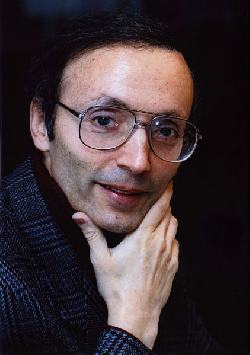
Enoch Powell Part 5
British politician
- Life
- 16 June 1912 - 8 February 1998
- Birthday
- June 16
- Length
- 24 parts
These changes were "greatly repugnant" to Powell:
For the rest of his life, Powell regarded this speech as the finest he ever delivered, not the much more well-known 1968 anti-immigration speech.
In mid-November 1953 Powell secured a place on the 1922 Committee's executive after the third time of trying. Rab Butler also invited him onto the committee that reviewed party policy for the general election, which he attended until 1955. Powell was a member of the Suez Group of MPs who were against the removal of British troops from the Suez Canal because such a move would demonstrate, Powell argued, that Britain could no longer maintain a position there and that any claim to the Suez Canal would therefore be illogical. However, after the troops had left in 1954 and the Egyptians nationalised the Canal in 1956, Powell opposed the British attempts to retake the Canal in the Suez Crisis because he thought the British no longer had the resources to be a world power.
Elections contested
UK Parliament elections
| Date of election | Constituency | Party | Votes | % | Result |
|---|---|---|---|---|---|
| Normanton by-election, 1947 | Normanton | Conservative | 4,258 | 17.9 | Not elected |
| United Kingdom general election, 1950 | Wolverhampton South West | Conservative | 20,239 | 46.0 | Elected |
| United Kingdom general election, 1951 | Wolverhampton South West | Conservative | 23,660 | 53.6 | Elected |
| United Kingdom general election, 1955 | Wolverhampton South West | Conservative | 25,318 | 60.0 | Elected |
| United Kingdom general election, 1959 | Wolverhampton South West | Conservative | 25,696 | 63.9 | Elected |
| United Kingdom general election, 1964 | Wolverhampton South West | Conservative | 21,736 | 57.4 | Elected |
| United Kingdom general election, 1966 | Wolverhampton South West | Conservative | 21,466 | 59.1 | Elected |
| United Kingdom general election, 1970 | Wolverhampton South West | Conservative | 26,220 | 64.3 | Elected |
| United Kingdom general election, October 1974 | South Down | Ulster Unionist | 33,614 | 50.8 | Elected |
| United Kingdom general election, 1979 | South Down | Ulster Unionist | 32,254 | 50.0 | Elected |
| United Kingdom general election, 1983 | South Down | Ulster Unionist | 20,693 | 40.3 | Elected |
| Northern Ireland by-elections, 1986 | South Down | Ulster Unionist | 24,963 | 48.4 | Elected |
| United Kingdom general election, 1987 | South Down | Ulster Unionist | 25,848 | 45.7 | Not elected |
Pre-war career
After graduating from Cambridge, Powell stayed on at Trinity College as a Fellow, spending much of his time studying ancient manuscripts in Latin and producing academic works in Greek and Welsh. In 1937, he was appointed Professor of Greek at the University of Sydney aged 25 (failing in his aim of beating Friedrich Nietzsche's record of becoming a professor at 24). Among his pupils was future Prime Minister of Australia Gough Whitlam. He revised Stuart-Jones's edition of Thucydides' Historiae for the Oxford University Press in 1938, and his most lasting contribution to classical scholarship was his Lexicon to Herodotus, published the same year.
Soon after arrival in Australia, he was appointed Curator of the Nicholson Museum at the University of Sydney. He stunned the vice-chancellor by informing him that war would soon begin in Europe and that when it did, he would be heading home to enlist in the army. By the time Powell had left King Edward's School in 1930, he had confirmed his instinctive belief that the Armistice was merely temporary and that Britain would be at war with Germany again. During his time in Australia as a professor, he grew increasingly angry at the appeasement of Nazi Germany and what he saw as a betrayal of British national interests. After Neville Chamberlain's first visit to Adolf Hitler at Berchtesgaden, Powell wrote in a letter to his parents of 18 September 1938:
Continue reading: part 6 of 24 →