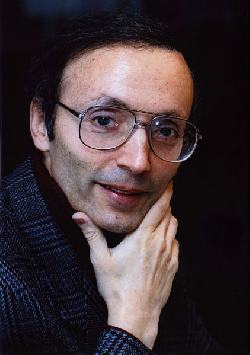
Enoch Powell Part 4
British politician
- Life
- 16 June 1912 - 8 February 1998
- Birthday
- June 16
- Length
- 24 parts
Powell never experienced combat and felt guilty for having survived, writing that soldiers who did so carried "a sort of shame with them to the grave" and referring to the Second Battle of El Alamein as a "separating flame" between the living and the dead. When once asked how he would like to be remembered, he at first answered, "Others will remember me as they will remember me", but when pressed he replied, "I should like to have been killed in the war".
Entry into politics
Joining the Conservative Party
Though he voted for the Labour Party in their 1945 landslide victory, because he wanted to punish the Conservative Party for the Munich agreement, after the war he joined the Conservatives and worked for the Conservative Research Department under Rab Butler, where his colleagues included Iain Macleod and Reginald Maudling.
Powell's ambition to be Viceroy of India crumbled in February 1947, when Prime Minister Clement Attlee announced that Indian independence was imminent. Powell was so shocked by the change of policy that he spent the whole night after it was announced walking the streets of London. He came to terms with it by becoming fiercely anti-imperialist, believing that once India had gone the whole empire should follow it. This logical absolutism explained his later indifference to the Suez crisis, his contempt for the Commonwealth and his urging that Britain should end any remaining pretence that it was a world power.
Election to Parliament
After unsuccessfully contesting the Labour Party's ultra-safe seat of Normanton at a by-election in 1947 (when the Labour majority was 62%), he was elected as Member of Parliament (MP) for Wolverhampton South West in the 1950 general election.
First years as a backbencher
On 16 March 1950, Powell made his maiden speech, speaking on a White Paper on Defence and beginning by saying,"There is no need for me to pretend those feelings of awe and hesitation which assail any hon. Member who rises to address this House for the first time...." at hansard.millbanksystems.com. Retrieved 16 November 2011
On 3 March 1953, Powell spoke against the Royal Titles Bill in the House of Commons. He said he found three major changes to the style of the United Kingdom, "all of which seem to me to be evil". The first one was "that in this title, for the first time, will be recognised a principle hitherto never admitted in this country, namely, the divisibility of the crown". Powell said that the unity of the realm had evolved over centuries and included the British Empire: "It was a unit because it had one Sovereign. There was one Sovereign: one realm". He feared that by "recognising the division of the realm into separate realms, are we not opening the way for that other remaining unity-–the last unity of all-–that of the person, to go the way of the rest?"
The second change he objected to was "the suppression of the word 'British', both from before the words 'Realms and Territories' where it is replaced by the words 'her other' and from before the word 'Commonwealth', which, in the Statute of Westminster, is described as the 'British Commonwealth of Nations'":
Powell claimed that the answer was that because the British Nationality Act 1948 had removed allegiance to the crown as the basis of citizenship and replaced that with nine separate citizenships combined together by statute. Therefore, if any of these nine countries became republics the law would not change, as happened with India when it became a republic. Furthermore, Powell went on, the essence of unity was "that all the parts recognise they would sacrifice themselves to the interests of the whole". He denied that there was in India that "recognition of belonging to a greater whole which involves the ultimate consequence in certain circumstances of self-sacrifice in the interests of the whole". Therefore the title 'Head of the Commonwealth', the third major change, was "essentially a sham. They are essentially something which we have invented to blind ourselves to the reality of the position".
Continue reading: part 5 of 24 →