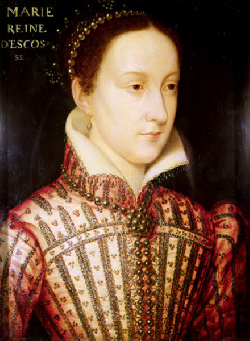
Mary, Queen of Scots Part 6
Scottish monarch
- Life
- 8 December 1542 - 8 February 1587
- Birthday
- December 8
- Length
- 10 parts
The casket letters did not appear publicly until the Conference of 1568, although the Scottish privy council had seen them by December 1567.; Mary had been forced to abdicate and held captive for the best part of a year in Scotland. The letters were never made public to support her imprisonment and forced abdication. Historian Jenny Wormald believes this reluctance on the part of the Scots to produce the letters, and their destruction in 1584, whatever their content, is proof that they contained real evidence against Mary,; whereas Weir thinks it shows the lords required time to fabricate them. At least some of Mary's contemporaries who saw the letters had no doubt that they were genuine. Among them was the Duke of Norfolk,; who secretly conspired to marry Mary in the course of the commission, although he denied it when Elizabeth alluded to his marriage plans, saying "he meant never to marry with a person, where he could not be sure of his pillow".;
The majority of the commissioners accepted the casket letters as genuine after a study of their contents and comparison of the penmanship with examples of Mary's handwriting. Elizabeth, as she had wished, concluded the inquiry with a verdict that nothing was proven, either against the confederate lords or Mary.; For overriding political reasons, Elizabeth wished to neither convict nor acquit Mary of murder, and there was never any intention to proceed judicially; the conference was intended as a political exercise. In the end, Moray returned to Scotland as its regent and Mary remained in custody in England. Elizabeth had succeeded in maintaining a Protestant government in Scotland, without either condemning or releasing her fellow sovereign. In Fraser's opinion, it was one of the strangest "trials" in legal history, ending with no finding of guilt against either party with one let home to Scotland while the other remained in custody.
Plots
On 26 January 1569, Mary was moved to Tutbury Castle, and placed in the custody of the Earl of Shrewsbury and his formidable wife Bess of Hardwick.; ; Elizabeth considered Mary's designs on the English throne to be a serious threat and so confined Mary to Shrewsbury's properties, including Tutbury, Sheffield Castle, Wingfield Manor and Chatsworth House,; that were in the interior of England halfway between Scotland and London, and distant from the sea. She was permitted her own domestic staff, which never numbered less than 16, and needed 30 carts to transport her belongings from house to house. Her chambers were decorated with fine tapestries and carpets, as well as her cloth of state on which she had the French phrase En ma fin est mon commencement ("In my end lies my beginning") embroidered.It had been the motto of her mother (). Her bedlinen was changed daily, and her own chefs prepared meals with a choice of 32 dishes served off silver plates. She was occasionally allowed outside under strict supervision, spent seven summers at the spa town of Buxton, and spent much of her time doing embroidery. Her health declined, perhaps through porphyria or lack of exercise, and by the 1580s, she had severe rheumatism in her limbs, rendering her lame.;
In May 1569, Elizabeth attempted to mediate the restoration of Mary in return for guarantees of the Protestant religion, but a convention at Perth rejected the deal overwhelmingly. Norfolk continued to scheme for a marriage with Mary, and Elizabeth imprisoned him in the Tower of London between October 1569 and August 1570.; Early in the following year, Moray was assassinated. Moray's death coincided with a rebellion in the North of England, led by Catholic earls, which persuaded Elizabeth that Mary was a threat. English troops intervened in the Scottish civil war, consolidating the power of the anti-Marian forces.; Elizabeth's principal secretaries Sir Francis Walsingham and William Cecil, Lord Burghley, watched Mary carefully with the aid of spies placed in Mary's household.;
In 1571, Cecil and Walsingham uncovered the Ridolfi Plot, which was a plan to replace Elizabeth with Mary with the help of Spanish troops and the Duke of Norfolk. Norfolk was executed, and the English Parliament introduced a bill barring Mary from the throne, to which Elizabeth refused to give royal assent.; ; To discredit Mary, the casket letters were published in London.; ; Plots centred on Mary continued, and after the Throckmorton Plot, Walsingham introduced the Bond of Association and the Act for the Queen's Safety, which sanctioned the killing of anyone who plotted against Elizabeth and was aimed at preventing a putative successor from profiting from her murder.; ; In April 1585, Mary was placed in the stricter custody of Sir Amias Paulet,; and at Christmas she was moved to a moated manor house at Chartley.
Continue reading: part 7 of 10 →
