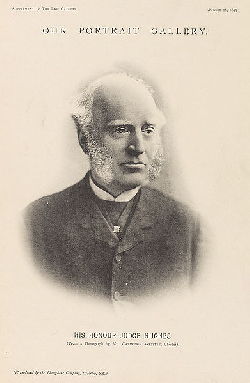
Talcott Parsons Part 9
American sociologist
- Life
- December 13, 1902 – May 8, 1979
- Birthday
- December 13
- Field
- State, Presidents
- Length
- 32 parts
Parsons takes charge at Harvard
Parsons’ situation at Harvard University changed significantly in early 1944 when he received a good offer from Northwestern University. Harvard reacted to the offer from Northwestern by appointing Parsons as the chairman of the department, promoting him to the rank of full professor and accepting the process of reorganization, which could lead to the establishment of the new department of Social Relations. Parsons’ letter to Dean Paul Buck of April 3, 1944 reveals the high point of this moment.Letter from Talcott Parsons to Dean Paul Buck, April 3, 1944. Talcott Parsons Collection. Harvard University Archives. Because of the new development at Harvard, Parsons chose to decline an offer from William Langer to join the O.S.S. (Office of Strategic Services). The assignment Langer proposed for Parsons was that Parsons should follow the American army in its march into Germany and function as a political adviser to the administration of the occupied territories. Late in 1944, under the auspices of the Cambridge Community Council, Parsons directed a project together with Elizabeth Schlesinger. They investigated ethnic and racial tensions in the Boston area between students from Radcliffe College and Wellesley College. This study was a reaction to the upsurge of antisemitism in the Boston area, which began in late 1943 and continued into 1944.Uta Gerhardt, "A World from Brave to New: Talcott Parsons and the War Effort at Harvard University." Journal of the History of the Behavioral Sciences Vol.15 (3), 257–289, Summer 1999. p. 266. At the end of November 1946, the Social Research Council (SSRC) asked Parsons to write a comprehensive report of the topic of how the social sciences could contribute to the understanding of the modern world. The background was a controversy over whether the social sciences should be incorporated into the National Science Foundation. Parsons’ report in form of a large memorandum called "Social Science: A Basic National Resource" became available in July 1948 and remains a powerful historical statement about how Talcott Parsons saw the role of the modern Social Sciences.Talcott Parsons, "Social Science: A Basic National Resource." In Samuel Z. Klauser & Victor M. Lidz (eds.) The Nationalization of the Social Sciences. Philadelphia: University of Pennsylvania Press, 1986.
The Russian Research Center at Harvard
Parsons became a member of the Executive Committee of the newly established Russian Research Center at Harvard in 1948, which had Parsons’ close friend and colleague, Clyde Kluckhohn, as its director. Parsons went to Allied-occupied Germany in the summer of 1948 where he functioned as a contact person on behalf of RRC who was interested in the Russian refugees who had been stranded in Germany. Among the people Parsons happened to interview while in Germany were a few members of the Vlasov Army, which was an anti-Sovietic Russian Liberation Army who had collaborated with the Germans during the war.Jens Kaalhauge Nielsen, "The Political Orientation of Talcott Parsons: The Second World War and its Aftermath." In Roland Robertson & Bryan S. Turner (eds.) Talcott Parsons: Theorist of Modernity. London: Sage Publications, 1991. The movement was named after Andrey Vlasov who was a Sovietic general captured by the Germans in June 1942. The Vlasov movement’s ideology was a hybrid of elements but has been called "communism without Stalin" although in the Prague Manifesto (1944) the Vlasovs moved toward the framework of a constitutional liberal state.Catherine Andreyev, Vlasov and the Russian Liberation Movement: Soviet reality and émigré theories. Cambridge: Cambridge University Press, 1987. While in Germany that summer of 1948 Parsons wrote several letters to Kluckhohn reporting on his intelligence-investigations.
Against Communism
Parsons’ fight against Communism was a natural extension of his fight against fascism in the 1930s and 1940s. For Parsons, communism and fascism were two aspects of the same problem; they both represented what Parsons in his discussion in his article "A Tentative Outline of American Values" (posthum, 1989)Talcott Parsons, "A Tentative Outline of American Values" in Roland Robertson & Bryan S. Turner (eds.) Talcott Parsons: Theorist of Modernity.London: Sage Publication, 1991. The article "A Tentative Outline of the American Value System" was written in 1959 or 1960 and can be seen as a kind of prelude of Parsons’ long-term interest in writing a major work about American Society, which at the same time was an attempt to facilitate the theoretical fundament of the concept of the "societal community," which represented the I-factor (the integrative function) of the social system and which extreme importance lied in the fact that Parsons in a sense regarded it as the epi-center (or the logical "starting-point") of the general process of differentiation in (and of) society. called collectivistic types of "empirical finalism," which he believed was a secular "mirror" of religious types of "salvationalism." In contrast, Parsons highlighted that American values generally were based on the principle of "instrumental activism," which he believed was the outcome of Puritanism as a historical process. It representing what Parsons called "worldly asceticism" and in that capacity, it represented the absolute opposite principle of empirical finalism. It is also in this light one shall understand Parsons’ statement late in life that the greatest threat to Mankind was that of "fundamentalism" in whatever form.Talcott Parsons, "Some Theoretical Considerations on the Nature and Trends of Change of Ethnicity" in Talcott Parsons, Social Systems and the Evolution of Action Theory New York: The Free Press, 1977. (Originally published 1975). p.393. By the term "empirical finalism" Parsons implied the type of claim assessed by cultural and ideological actors about the correct or "final" ends of particular patterns of value-orientation in the actual historical world (such as the notion of "a truly just society") which was absolutist and "indisputable" in its manner of declaration and in its function as a belief system. For example, the Jacobins behavior during the French Revolution would be a typical example of "empirical finalism." Parsons’ rejection of communist and fascist totalitarianism was both theoretically and intellectually an integral part of his theory of world history, where Parsons tended to regard the European Reformation as the most crucial event in "modern" world history and where he like Max WeberMax Weber, The Protestant Ethics and the Spirit of Capitalism Roxbury Publishing Company, 2002. tended to highlight the crucial impact of Calvinist religiosity in the socio-political and socio-economic processes, which followed;Jens Kaalhauge Nielsen, "Are there Cultural Limits to Inclusion? An Analysis of the Relation Between Culture and Social Evolution in Talcott Parsons’ Theory." In Gabriele Pollini & Giuseppe Sciortino (eds). Parsons’ The Structure of Social Action and Contemporary Debates. Milano, Italy: FrancoAngeli, 2001. this development Parsons maintained reached its most radical form in England during the 17th century and gave in effect birth to the special cultural mode, which has characterized the American (United States) value-system and history ever since. Although it was not intended, the Calvinist faith-system, though authoritarian in the beginning, released in its long-term institutional effects a fundamental democratic revolution in the world;Letter from Talcott Parsons to Eric Voegelin, May 13, 1941. Talcott Parsons collection, Harvard University Archive. a revolution Parsons maintained was steadily unfolding as a part of the interpenetration of Puritan values in the world at large.See among others: Talcott Parsons, "Religious and Economic Symbolism in the Western World." Sociological Inquiry. Vol.49. (1) 1979. pp. 1–48.
Continue reading: part 10 of 32 →