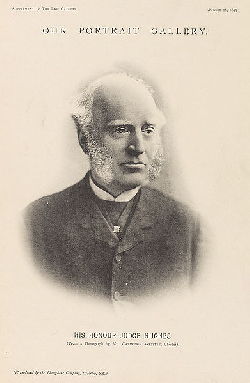
Talcott Parsons Part 31
American sociologist
- Life
- December 13, 1902 – May 8, 1979
- Birthday
- December 13
- Field
- State, Presidents
- Length
- 32 parts
The pure AGIL model for all living systems:
- (A) Adaptation.
- (G) Goal Attainment.
- (I) Integration.
- (L) Pattern maintenance. (L stand for "Latent function").
The Social system level:
- The economy — social adaptation to its action and non-action environmental systems
- The polity — collective goal attainment
- The societal community — the integration of its diverse social components
- The fiduciary system — processes that function to reproduce historical culture in its "direct" social embeddedness.
The General Action Level:
- The behavioral organism (or system). (In later version, the foci for generalized "intelligence.").
- The personality system.
- The social system.
- The cultural system. (See cultural level).
The cultural level:
- Cognitive symbolization.
- Expressive symbolization.
- Evaluative symbolization. (Sometimes called: moral-evaluative symbolization).
- Constitutive symbolization.
The Generalized Symbolic media:
Social System level:
- (A) Economic system: Money.
- (G) Political system: Political power.
- (I) The Societal Community: Influence.
- (L) The Fiduciary system (cultural tradition): Value-commitment.
Parsons elaborated upon the idea that each of these systems also developed some specialized symbolic mechanisms of interaction analogous to money in the economy, e.g.., influence in the social community. Various processes of "interchange" among the subsystems of the social system were postulated.
Parsons’ use of social systems analysis based on the AGIL scheme was established in his work Economy and Society (with N. Smelser, 1956) and has prevailed in all his work ever since. However, the AGIL system does only exist in a "rudimentary" form in the beginning and is then gradually elaborated and expanded in the decades which followed. A brief introduction to Parsons’ AGIL scheme can be found in chapter 2 of The American University (with G. Platt, 1973). There is, however, no single place in Parsons writing where the total AGIL system is visually displayed or explained—the complete system have to be reconstructed from multiple places in his writing. The system displayed in "The American University" is only the most basic elements and should not be mistaken for the whole system.
Social evolutionism
Parsons contributed to the field of social evolutionism and neoevolutionism. He divided evolution into four sub-processes:
- differentiation, which creates functional subsystems of the main system, as discussed above;
- adaptation, where those systems evolve into more efficient versions;
- inclusion of elements previously excluded from the given systems;
- generalization of values, increasing the legitimization of the increasingly complex system.
Furthermore, Parsons explored these sub-processes within three stages of evolution:
- primitive,
- archaic and
- modern
Parsons viewed Western civilisation as the pinnacle of modern societies, and out of all western cultures he declared the United States as the most dynamically developed.
Parsons’ late work focused on a new theoretical synthesis around four functions common (he claimed) to all systems of action—from the behavioral to the cultural, and a set of symbolic media that enable communication across them. His attempt to structure the world of action according to a scheme that focused on order was unacceptable for American sociologists, who were at that time retreating from the grand pretensions of the 1960s to a more empirical, grounded approach.
Pattern variables
Parsons asserted that there were two dimensions to societies: instrumental and expressive. By this he meant that there are qualitative differences between kinds of social interaction.
Continue reading: part 32 of 32 →