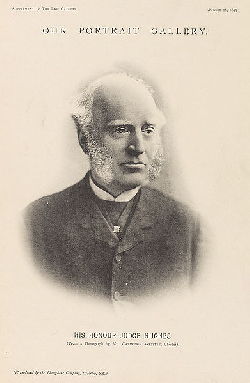
Talcott Parsons Part 2
American sociologist
- Life
- December 13, 1902 – May 8, 1979
- Birthday
- December 13
- Field
- State, Presidents
- Length
- 32 parts
Edited volumes
- Talcott Parsons and Kenneth B. Clark (eds.) The Negro American. Beacon Press, 1967.
- Talcott Parsons (ed.) Knowledge and Society – American Sociology. New York: Basic Books, 1968. (A collection of essays with an introduction by Talcott Parsons).
- Talcott Parsons and Victor M. Lidz (eds:) Readings in Premodern Societies. Englewood Cliffs, Prentice-Hall, 1972.
Biography
During his Congregational ministry in Greeley, Edward S. Parsons had become sympathetic to the social gospel movement; yet, at the same time, he tended to view this question from a higher theological position and he was hostile to socialism as a sheer ideology.Edward S. Parsons, "A Christian Critique of Socialism." Andover Review XI. 1889. pp. 597–611. Also both Edward S. Parsons and his son Talcott would be familiar with the theology of Jonathan Edwards. The father would later become the president of Marietta College in Ohio. Parsons’ family is one of the oldest families in American history; his ancestors were some of the first to arrive from England in the first half of the 17th century.Charles Parsons (2004). "Some remarks on Talcott Parsons’s family". In: Journal The American Sociologist. Vol 35, Nr 3, Sept 2004. pp. 4–22. The family’s heritage consisted of two separate and independently developed Parsons lines, which both went back to the early days of America and indeed deeper into British history. On the father’s side the family could be traced back to the Parsons of York, Maine. On the mother’s side, the Ingersoll line was connected with Jonathan Edwards and from Edwards on there would be a new independent Parsons line because his eldest daughter Sarah married Elihu Parsons on June 11, 1750.
Studies: Amherst College
Two term papers Parsons wrote as a student for Clarence E. Ayres’ class in Philosophy III at Amherst have survived. These are referred to as the Amherst papers and have been of strong interest to Parsons scholars. The first is written on December 19, 1922 and is called "The Theory of Human Behavior in its Individual and Social Aspects."Talcott Parsons, "The Theory of Human Behavior in its Individual and Social Aspects" The American Sociologist Vol.27.no.4. Winter 1996. pp.13-23. The second term paper is written on March 27, 1923 and is called "A Behavioristic Conception of the Nature of Morals."Talcott Parsons, "A Behavioristic Concept of the Nature of Morals." The American Sociologist Vol.27.no.4. Winter 1996. pp. 24–37. The papers reveal in part Parsons’ early interest in social evolutionary questions.Jens Kaalhauge Nielsen, "Beyond the Myth of "Radical Breaks" in Talcott Parsons’s Theory: An Analysis of the Amherst Papers." The American Sociologist. Winter 1996. Volume 27. no.4. pp. 48–54. The Amherst Papers also reveal that Parsons did not agree with his institutionalist teachers, since he writes in the Amherst papers that technological development and moral progress are two structurally independent empirical processes.
As an undergraduate, Parsons studied biology, sociology and philosophy at Amherst College and received his B.A. in 1924. Amherst College had become the Parsons’ family college by tradition; his father and his uncle Frank had attended it, as had his older brother. Initially Parsons was attracted to a career in medicine, inspired in this direction by his older brother Charles Edward Parsons, so he studied a great deal of biology and spent a summer working at the Oceanographic Institution at Woods Hole, Massachusetts.
Parsons’ biology teachers while at Amherst were Otto C. Glaser and Henry Plough. Gently mocked as "Little Talcott, the gilded cherub", Parsons became one of the student leaders at Amherst. Parsons also took courses with Walton Hamilton and the philosopher Clarence Edwin Ayres, both known as "institutional economists". They exposed him to literature by Thorstein Veblen, John Dewey, and William Graham Sumner, among others. Parsons also took a course with George Brown in the philosophy of Immanuel Kant, and a course in modern German philosophy with Otto Manthey-Zorn, who was a great Kant interpreter. Parsons showed from early on a great interest in the topic of philosophy, which most likely was an echo of his father’s great interest in theology in the tradition of which he had been profoundly socialized, a position that contrasted with his teachers’ view.
Continue reading: part 3 of 32 →