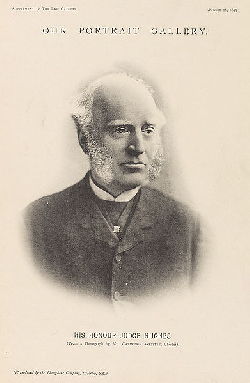
Talcott Parsons Part 3
American sociologist
- Life
- December 13, 1902 – May 8, 1979
- Birthday
- December 13
- Field
- State, Presidents
- Length
- 32 parts
Studies: London School of Economics
After Amherst, he studied at the London School of Economics for a year, where he was exposed to the work of R. H. Tawney, Bronisław Malinowski, and Leonard Trelawny Hobhouse. During his days at LSE he made friends with E.E. Evans-Pritchard, Meyer Fortes and Raymonth Firth, who all participated in the Malinowski seminar and in addition, he made a close personal friendship with Arthur and Eveline Burns.
While studying at LSE he met a young American girl in the students common room by the name of Helen Bancroft Walker whom he married on April 30, 1927. The couple had three children, Anne, Charles and Susan and eventually four grandchildren. Helen’s father was born in Canada but had moved to the Boston area and had become a naturalized American citizen.
Studies: University of Heidelberg
Parsons went on to the University of Heidelberg, where he received his Ph.D. in sociology and economics. During his time in Heidelberg, he worked with Alfred Weber (Max Weber’s brother), Edgar Salin (who was his dissertation adviser) Emil Lederer, and Karl Mannheim and in addition he was examined in Immanuel Kant’s "Critique of pure Reason" by the philosopher Karl Jaspers.Alexander Stingl Between Discursivity and Sensus Communis: Kant, Kantianism and the Social Media Theory of Talcott Parsons. Inaugural-Dissertation, Friedrich-Alexander-Universität, edited for publication, OPUS Erlangen-Nürnberg University Press, 2008.
- Alexander I. Stingl Anthropos’ Scaffoldings: Studies in the Coevolution of Sociology, Biology, Medicine, and Philosophy. (with a foreword by Sal Restivo) forthcoming.. At Heidelberg Parsons was also examed by Willy Andreas in the French Revolution. Parsons wrote his Dr. phil. thesis on The Concept of Capitalism in the Recent German Literature with his main focus on the work of Werner Sombart and Max Weber. It was clear from his discussion that he rejected Sombart’s quasi-idealistic views and was in favor of Weber’s attempt to strike a balance between "historicism", "idealism" and a Neo-Kantian approach.
The most crucial encounter for Parsons at Heidelberg was his encounter with the work of Max Weber, who he never had heard about before he arrived. Weber became tremendously important for Parsons because given his upbringing with a liberal yet strongly religious father, the question of the role of culture and religion in the basic processes of world history had been a persistent puzzle in his mind. Weber was the first scholar who truly provided Parsons with a compelling theoretical "answer" to this question and Parsons became absorbed in the reading of Weber to the utmost extent.
Parsons decided among other things that he would like to translate Weber’s work into English and approached Marianne Weber, Max Weber’s wife in this regard and he would eventually translate several of Weber’s works into English.Talcott Parsons, "The Circumstances of My Encounter with Max Weber" in Robert K. Merton & Matilda White Riley (eds.) Sociological Traditions from Generation to Generation. Norwood, NJ.: Ablex, 1980.Uta Gerhardt, "Much More than a Mere Translation Talcott Parsons’ Translation into English of Max Weber’s Protestantische Ethik und der Geist der Kapitalismus: An Essay in Intellectual History." The Canadian Journal of Sociology. Vol.32. No.1. Winter 2007. pp. 41–62. During his time in Heidelberg Parsons was invited by Marianne Weber to "sociological teas," which was study group meetings Marianne would held in the library room of her and Max Weber’s old apartment. One scholar who Parsons met at Heidelberg who shared his enthusiasm for Weber was Alexander von Schelting and Parsons would later write a review article on von Schelting’s work on Weber.Talcott Parsons, "Review of Max Webers Wissenschaftslehre, by Alexander von Schelting," American Sociological Review vol.1. 1936: 675–81. Generally, Parsons would read extensively in religious literature and especially on works focusing on the sociology of religion. One scholar who especially became important for Parsons in this regard was Ernst D. Troeltsch (1865–1923). Parsons would also read very widely on the topic of Calvinism and his reading would include the work of Emile Doumerque,Emile Doumerque, Jean Calvin: Les hommes et les choses de son temps, 7 volumes. Lausanne, 1899-1927. Eugéne Choisy and Henri Hauser.
Continue reading: part 4 of 32 →