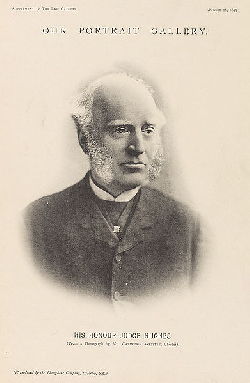
Talcott Parsons Part 22
American sociologist
- Life
- December 13, 1902 – May 8, 1979
- Birthday
- December 13
- Field
- State, Presidents
- Length
- 32 parts
Parsons had during his lifetime worked intensively with questions of medical sociology, the medical profession, psychiatry, psychosomatic problems and related issues with the questions of health and illness. Most of all Parsons had become known for his concept of "the Sick role." This field of social research was an issue, which Parsons constantly developed through elaboration and self-criticism. Parsons participated at the World Congress of Sociology in Toronto in August 1974, where he presented a paper called "The sick role revisited: a response to critics and an updating in terms of the theory of action," which was published under a slightly different title in 1975.Talcott Parsons, "The Sick Role and the Role of the Physician Reconsidered." Millbank Memorial Fund Quarterly vol.53.no.3. Summer 1975. pp. 257–278. In his essay Parsons highlighted that his concept of "sick role" never was meant to confine this category to "deviant behavior," although as he stated it: "its negative valuation should not be forgotten." It was also important to keep a certain focus on the "motivatedness" of illness, since there always is a factor of unconscious motivation in the therapeutic aspects of the sick role.
In 1975 Robert N. Bellah published his book called The Broken Covenant.Robert N. Bellah, The Broken Covenant: American Civil Religion in Time of Trial. New York: Seabury Press, 1975. "The Covenant" Bellah speaks about refers to the sermon delivered by John Winthrop (1587–1649) to this flock on board his ship ‘Arbella’ on the evening of the landing in Massachusetts Bay in the year 1630. In his sermon Winthrop declared that the Puritan colonists emigrating to the New World was part of a special pact (Covenant) with God to create a holy community. Winthrop used the phrases: "For we must consider that we shall be a city on the hill. The eyes of all people are upon us." Parsons disagreed strongly with Bellah’s analysis in The Broken Covenant and insisted that "the covenant" was not broken. Parsons later used a major part of his influential article, "Law as an Intellectual Stepchild"Talcott Parsons, "Law as an intellectual stepchild" in Harry M. Johnson (ed.) System and Legal Process San Francisco, 1978 to discuss Bellah’s position in The Broken Covenant. Parsons found that Bellah unduly trivialized the discussion of the tension and problems involved in questions of individual interests and collective interests on the level of total society by reducing them to the concept of "capitalism." Parsons find that Bellah in his characterization of the negative aspects of American society is compelled by a charismatic based optimalism and he declared that Bellah’s position in The Broken Covenant is that of moral absolutism.
In 1975 Parsons responded to an article by Jonathan H. Turner called "Parsons as a symbolic interactionist."Jonathan Turner, "Parsons as a symbolic interactionist: A Comparison of Action and Interaction theory."Sociological Inquiry Vol.44. no.4. 1974. In his response Parsons acknowledged that action theory and symbolic interactionism should not be regarded as two separate, antagonistic positions; in contrast they have overlapping structures of conceptualization.Talcott Parsons, "comment on ‘Parsons as an symbolic interactionist’ by Jonathan Turner.Sociological Inquiry. Vol.45. no.1. 1975. pp. 62–65. Parsons regarded symbolic interactionism and the theory of George Herbert Mead as valuable contributions to action theory specifying certain aspects of the theory of the personality of the individual. Parsons, however, criticized the symbolic interactionism of Herbert Blumer, since in Blumer’s theory there is no end to the openness of action. Parsons regarded Blumer as the mirror image of Claude Lévi-StraussClaude Lévi-Strauss, Structural Anthropology. Garden City, New York, 1963. who tended to stress the quasi-determined nature of macro-structural systems. Action theory, Parsons maintained, represented a middle ground between these two extremes.
Continue reading: part 23 of 32 →