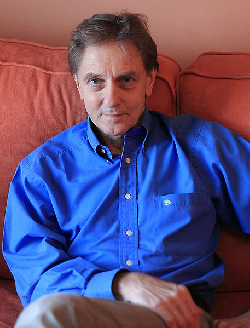
Colin Blakemore Part 5
Monarchs
- Life
- 1944
- Length
- 5 parts
Blakemore has served in an advisory role for several UK government departments and also for agencies, foundations and government departments overseas. He was a member of the Independent Expert Group on Mobile Phones (the Stewart Committee) in 1999-2000 and was an advisor to the Police Federation and the Home Office on the safety of telecommunications systems. He chairs the General Advisory Committee on Science at the Food Standards Agency and is a member of the Wilton Park Advisory Council (Foreign and Commonwealth Office). He has a long-standing interest in policy on drugs of abuse, and is a Commissioner of the UK Drug Policy Commission,http://www.ukdpc.org.uk an adviser to the Beckley Foundation and a Trustee of the Independent Scientific Committee on Drugs. He was an author of an influential paper published in the Lancet in 2007, introducing a rational, evidence-based system for assessing the harms of drugs, which suggested that alcohol and tobacco are more harmful than many illegal drugs.Nutt, D. J., King, L. A., Saulsbury, W. & Blakemore, C. (2007) "Development of a rational scale to assess the harm of drugs of potential misuse". Lancet 369: 1047-1053. He is a member of the Longevity Science Advisory Panel of Legal & General, he sits on the European Advisory Board of Princeton University Press and he has served as a scientific advisor to the Technology Development Committee of Abu Dhabi.www.tdc.gov.ae
Research
Colin Blakemore's research has focused on vision, the early development of the brain and, more recently, conditions such as stroke and Huntington's disease. He has published hundreds of scientific papers and a number of books on these subjects.
His major contribution to neuroscience is the part he played in establishing the concept of neuronal plasticity, the capacity of the brain to reorganise itself as a result of the pattern of activity passing through its connections. Blakemore was one of the first, in the late 1960s, to demonstrate that the visual part of the cerebral cortex undergoes active, adaptive change during a specific period shortly after birth, and he argued that this helps the brain to match itself to the sensory environment. He went on to show that such plasticity results from changes in the shape and structure of nerve cells and the distribution of nerve fibres, and also from the selective death of nerve cells.
Although initially controversial, the idea that the mammalian brain is 'plastic' and adaptive is now a dominant theme in neuroscience. The plasticity of connections between nerve cells is thought to underlie many different types of learning and memory, as well as sensory development. The changes in organisation can be remarkably rapid, even in adults. Blakemore has shown that the visual parts of the human cortex are 'taken over' by the other senses, especially touch, in people who have been blind since shortly after birth. After stroke or other forms of brain injury, reorganisation of this sort can help the process of recovery, as other parts of the brain take over the function of the damaged part.
Blakemore's recent work has emphasized the variety of molecular mechanisms that contribute to plasticity and has identified some of the genes involved in enabling nerve cells to modify their connections in response to the flow of nerve impulses through them. He summarised research on brain plasticity in his 2005 Harveian Lecture to the Royal College of Physicians and explored the role of plasticity in human cultural evolution in his 2010 Ferrier Lecture at the Royal Society.