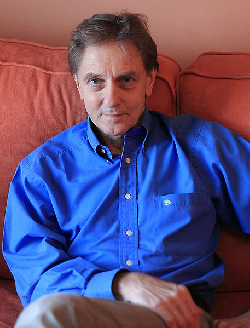
Colin Blakemore Part 4
Monarchs
- Life
- 1944
- Length
- 5 parts
A House of Commons select committee investigated the claims. They found "no specific credible evidence" to support the complaint, reporting the allegation "would have carried more weight had it been made at the time rather than in public during the final stages of the decision making process when relations between NIMR and MRC management had fallen into mutual animosity."
The committee did criticise Blakemore for "heavy handed" lobbying of other taskforce members and reported that a "more independent" figure than Blakemore should have chaired the taskforce. However, the report also criticised unnamed senior NIMR staff for an attempt at "undermining Blakemore's position."
The MRC has maintained its commitment to relocate NIMR and has entered into partnership with the Wellcome Trust, Cancer Research UK, University College London, Imperial College London and King's College London, to create the Francis Crick Institute on a site adjacent to the British Library and St Pancras Station in London.http://www.nimr.mrc.ac.uk/news/2009/ukcmri-design/
Public engagement and public service
In parallel with his academic career, Colin Blakemore has championed the communication of science and engagement with the public on controversial and challenging aspects of science.
In 1976, at the age of 32, he was the youngest ever person to give the BBC Reith Lectures for which he presented a series of six talks entitled .
He has subsequently presented or contributed to hundreds of radio and television broadcasts. He gave the Royal Institution Christmas Lectures in 1982-3, and he has written and presented many other programmes about science, including a 13-part series, The Mind Machine on BBC television, a radio series about artificial intelligence, Machines with Minds, and a documentary for Channel 4 television, God and the Scientists. He writes for British and overseas newspapers, especially The Guardian, The Observer, the Daily Telegraph and The Times. He has also written or edited several popular science books, including Mechanics of the Mind, The Mind Machine. Gender and Society, Mindwaves, Images and Understanding and The Oxford Companion to the Body. Since 2004 he has been Honorary President of the Association of British Science Writers.
In 1989, when Blakemore was awarded the Royal Society's Michael Faraday Prize for his work in public communication, the citation described him as "one of Britain's most influential communicators of science”. Blakemore has won many other awards for his work in public communication and education, including the Phi Beta Kappa Award for contribution to the literature of science, the John P McGovern Science and Society Medal from Sigma Xi, the Edinburgh Medal from the City of Edinburgh and the Science Educator Award from the Society for Neuroscience.
Blakemore has worked for many medical charities and not-for-profit organizations, including SANE, the International Brain Injury Association, Headway, Sense (The National Deafblind & Rubella Association), the Louise T Blouin Foundation, Sense about Science and the Pilgrim Trust. He is President of the Motor Neurone Disease Association and the Brain Tumour Charity,http://www.thebraintumourcharity.org Vice President of the Progressive Supranuclear Palsy Associationhttp://www.pspassociation.org.uk and a Patron of Dignity in Dying.
He helped the Dana Foundation of New York to establish the European Dana Alliance for the Brain, an alliance of leading European neuroscientists who are committed to raising awareness of the importance of brain research. A large donation from the Dana Foundation to the Science Museum completed the funding for the Dana Centre on Queen's Gate in London, which became a focus for public engagement with science.
He has been a Fellow of the World Economic Forum, and he is Honorary President of the World Cultural Council, a member of the World Federation of Scientists and a Distinguished Supporter of the British Humanist Association. He is one of the patrons of the Oxford University Scientific Society and an Honorary Member of the Cambridge Union Society. He is Deputy Chair of the Board of Directors of the Campaign for Science and Engineering.
Continue reading: part 5 of 5 →