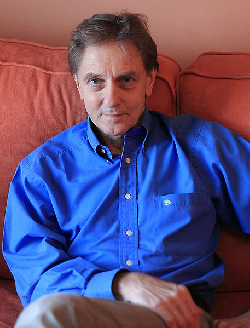
Colin Blakemore Part 3
Monarchs
- Life
- 1944
- Length
- 5 parts
He maintained his research activity in Oxford during his period of office and said "I want to be seen as the scientist, not the bureaucrat at the top. No, I want to be seen as the scientist in the middle."Fazackerley, Anna. "Colin Blakemore: Professor No?" The Guardian 11 November 2003. http://www.guardian.co.uk/society/2003/nov/11/health.education
Blakemore initiated a comprehensive review of the MRC's strategy and argued for a stronger commitment to clinical research and to the translation of basic research into benefits for patients. These actions anticipated Sir David Cooksey's 2006 "Review of UK health research funding",http://www.hm-treasury.gov.uk/d/pbr06_cooksey_final_report_636.pdf which resulted in closer working between the MRC and the Departments of Health, but which recommended that "funding levels for basic science should be sustained". In the Comprehensive Spending Review at the end of Blakemore's term of office, the budget of the MRC was increased by more than one third over three years. He was succeeded at the MRC by Leszek Borysiewicz.
On the completion of his appointment at the MRC in 2007, Blakemore returned to a Professorship of Neuroscience at Oxford before his appointment at the University of London in 2012.
Honours controversy
Soon after his appointment to the MRC The Sunday Times published a leaked British Cabinet Office document that suggested he was deemed unsuitable for inclusion in the 2004 New Year's Honours List because of his research on animals - research considered "controversial" by a British government committee that oversees matters of science and technology despite being widely supported by political leaders and the public.Leppard, David and Winnett, Robert. . The Sunday Times, 15 February 2004. In response, he threatened to resign, suggesting in interviews that his position as chief executive was now untenable:
It's a matter of principle. The mission statement of the MRC is explicit. There's a specific commitment to talk to the public about issues in medical research. How can I now go to our scientists, and ask them to risk talking about animal research, when there now appears to be evidence that in secret the government disapproves it, even though in public they've strongly encouraged it?Walgate, Robert. , The Scientist, 23 December 2003
A parliamentary inquiry investigating the matter implicated the Science and Technology Committee, 29 April 2004 chaired by Sir Richard Mottram. After expressions of support for animal experimentation from then Prime Minister Tony Blair; Chief Scientific Adviser David King; Minister for Science Lord Sainsbury; and the wider scientific community, Blakemore withdrew his threat to resign.Walgate, Robert. , The Scientist, 13 January 2004
As of 2013, he is the only MRC chief executive unrecognised by the British honours system.
National Institute for Medical Research taskforce
In 2003 the MRC announced plans to consider moving the National Institute for Medical Research, its largest research facility, from its current location in Mill Hill to a new site in central London. As part of the consultation process a taskforce was convened, with Blakemore as chairman, to consider options for the size and location of the new NIMR.http://www.mrc.ac.uk/AboutUs/OurStrategy/NIMRRenewal/index.htm During the process a number of senior staff at NIMR, including the then Director, Sir John Skehel, opposed a move being proposed as the only option, 8 February 2005 believing "staying at Mill Hill should be considered."Hagan, Pat , The Scientist, 8 February 2005
Robin Lovell-Badge, a scientist at NIMR who was a member of the taskforce, proposed this option be included in the official publication of the taskforce, something that Blakemore and the majority of other members were opposed to., 8 February 2005 After disagreeing on the issue, Lovell-Badge alleged that Blakemore had twice attempted to "coerce" him into agreement by threatening his job. Blakemore denied the allegations, describing them as "pure invention"., Press Association, 8 February 2005.
Continue reading: part 4 of 5 →