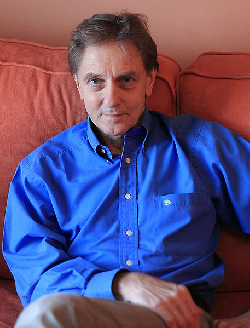
Colin Blakemore
Monarchs
- Life
- 1944
- Length
- 5 parts
Professor Colin Blakemore, Ph.D., FRS, FMedSci, HonFSB, HonFRCP, HonFRSM, is a British neurobiologist, specialising in vision and the development of the brain, who is Professor of Neuroscience and Philosophy in the School of Advanced Study, University of London and Emeritus Professor Neuroscience at the University of Oxford. He was formerly Chief Executive of the British Medical Research Council (MRC). He is best known to the public as a communicator of science but also as the target of a long-running animal-rights campaign. According to The Observer, he has been both "one of the most powerful scientists in the [UK]" and "a hate figure for the animal rights movement".McKie, Robin. . The Observer, 14 September 2003.
Animal testing and animal rights
Blakemore is outspoken in his support of the use of animal testing in medical research, though he has publicly denounced fox hunting and animal testing for cosmetics.
He came to the attention of the animal rights movement while at Oxford University in the 1980s, when he carried out research into amblyopia and strabismus, conducting experiments that involved sewing kittens' eyelids shut from birth in order to study the development of their visual cortex. Blakemore has said of the research that it was directly applicable to humans, and that "[t]hanks to it, and similar research, we now know why conditions like amblyopia — the most common form of child blindness — occur and are now able to tackle it and think of ways of preventing it."
Subsequently, according to The Observer, he and his family "endured assaults by masked terrorists, bombs sent to his children, letters laced with razor blades, a suicide bid by his wife, and more than a decade of attacks and abuse."
In 1992, together with Les Ward of the anti-vivisection group Advocates for Animals, he co-founded a bipartisan think tank called the Boyd Group, to consider issues relating to animal experimentation.
In 1998, during the 68-day hunger strike of British animal-rights activist Barry Horne, Blakemore's life was threatened in a statement released by Robin Webb of the Animal Liberation Press Office on behalf of the Animal Rights Militia. Direct action against him has abated since the prosecution of Cynthia O'Neill for harassing him in 2000.Fleet, Michael and Davies, Caroline. . The Daily Telegraph, 24 February 2000.
Blakemore has advocated frank and full public debate about animal research and has worked to persuade other researchers to be more open. He has been chair of the Coalition for Medical Progress, the Research Defence Society and Understanding Animal Research, an organisation devoted to making the case for responsible use of animals in research, which was launched in 2008.
Background
Born in Stratford-upon-Avon in 1944,, The Daily Telegraph, 26 June 2008 he was educated at King Henry VIII School in Coventry and then won a state scholarship to Corpus Christi College, Cambridge, England, where he gained a first-class degree in medical sciences. He completed his Doctor of Philosophy in Physiological Optics at the University of California, Berkeley, in the United States, as a Harkness Fellow in 1968. From 1968 to 79 he was a Demonstrator and then Lecturer in Physiology at the University of Cambridge, and was also Director of Medical Studies at Downing College. From 1976 to 1979 he held the Royal Society Locke Research Fellowship.
He was appointed Waynflete Professor of Physiology and a Fellow of Magdalen College at the University of Oxford in 1979, at the age of 35. He was also Director of the James S. McDonnell and Medical Research Council Centre for Cognitive Neuroscience at the University of Oxford. He has served as President of the Biosciences Federation, now the Society of Biology, the British Neuroscience Association and the Physiological Society, and as President and Chairman of the British Association for the Advancement of Science, now the British Science Association. He is a Fellow of the Royal Society, the Academy of Medical Sciences, Academia Europaea and the European Academy of Sciences and Arts, and an Honorary Fellow of the Royal College of Physicians, the Royal Society of Medicine, the Institute of Biology, the British Pharmacological Society, the Society of Biology, and of Corpus Christi College and Downing College in the University of Cambridge.
Continue reading: part 2 of 5 →