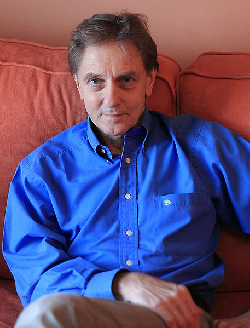
Colin Blakemore Part 2
Monarchs
- Life
- 1944
- Length
- 5 parts
In 2012 he was appointed director of the Institute of Philosophy's Centre for the Study of the Senses at the School of Advanced Study in London. He also holds a Honorary Professorship at the University of Warwick, and a Professorship at Duke-NUS Graduate Medical School in Singapore, where he was Chairman and then External Scientific Advisor to the Neuroscience Research Partnership.
Blakemore is a Distinguished Supporterhttp://www.humanism.org.uk/about/people/distinguished-supporters/Professor-Colin-Blakemore of the British Humanist Association and an Honorary Associatehttp://newhumanist.org.uk/2043/board-of-trustees-and-supporters of the Rationalist Association. In July 2001 he was one of the signatories to a letter published in The Independent which urged the Government to reconsider its support for the expansion of maintained religious schools, and he was one of the 43 scientists and philosophers who signed and sent a letter to Tony Blair and relevant Government departments, concerning the teaching of Creationism in schools in March 2002.http://www.humanism.org.uk/_uploads/documents/LettertoTonyBlair2002-03-26Creationism.pdf He was also one of the signatories to a letter supporting a holiday on Charles’ Darwin’s birthday,http://www.humanism.org.uk/_uploads/documents/DSletteronDarwinDay.pdf published in The Times on 12 February 2003, and sent to the Prime Minister and the Home Secretary.
Blakemore has been honoured for his scientific achievements with prizes from many academies and societies, including the Royal Society, the Swiss Academy of Medical Sciences, the French Académie Nationale de Médecine, the Royal Australian and New Zealand College of Ophthalmologists, the Royal College of Surgeons in Ireland, the BioIndustry Association and the Royal College of Physicians. In 1993 he received the Ellison-Cliffe Medal from the Royal Society of Medicine and in 1996 he won the Alcon Research Institute Award for research relevant to clinical ophthalmology. He has ten Honorary Degrees from British and overseas universities and is a foreign member of several academies of science, including the Royal Netherlands Academy of Arts and Sciences, the National Academy of Sciences of India, the Indian Academy of Neurosciences, and the Chinese Academy of Engineering. He won the 2010 Royal Society Ferrier Award and Lecture. In 2001 he received the British Neuroscience Association Award for Outstanding Contribution to Neuroscience, and in 2012 the Ralph W. Gerard Prize,http://www.sfn.org/Press-Room/News-Release-Archives/2012/Ralph-W-Gerard-Prize-in-Neuroscience-Recognizes-Outstanding-Contributions-of-Colin-Blakemore the highest award of the Society for Neuroscience. He chairs the Selection Committee for The Brain Prize of Grete Lundbeck's European Brain Research Prize Foundation,http://www.thebrainprize.org/ the world's most valuable prize for neuroscience (€1 million).
Blakemore first visited China in 1974, during the Cultural Revolution, and collaborated in research at the Chinese Academy of Sciences Institute of Biophysics, Beijing, in the late 1970s and early 1980s. His efforts to develop scientific relations between the United Kingdom and China were recognised in 2012 when he received the Friendship Award, the People's Republic of China's highest award for "foreign experts who have made outstanding contributions to the country's economic and social progress". In 2012 he was appointed a Master of the Beijing DeTao Masters Academy.
Despite a serious illness in his teens, Blakemore developed a lifelong interest in fitness and sport, especially long-distance running. He has completed 18 marathons and won the veteran's section for the British team at the Athens Centenary Marathon in 1996.
Medical Research Council
In 2003, Blakemore succeeded Professor Sir George Radda as the head of the Medical Research Council, a national organisation that supports medical science with an annual budget of more than £700 million. The reputation of the Medical Research Council had been damaged by what was perceived as financial mismanagement, the introduction of unpopular funding schemes and a lack of transparency in its dealings with researchers. Blakemore launched a national roadshow to consult the scientific community and quickly changed the mechanisms for handling funds, rationalised the grant schemes, introduced new forms of support for young researchers and overhauled the communications policies of the MRC.
Continue reading: part 3 of 5 →