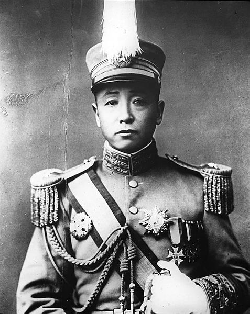
Yahya Khan Part 3
Presidents
- Life
- 4 February 1917 – 10 August 1980
- Birthday
- February 4
- Field
- State, Presidents
- Length
- 4 parts
Nixon relayed messages to Yahya, urging him to restrain Pakistani forces.Black, Conrad (2007), p. 751. His objective was to prevent a war and safeguard Pakistan’s interests, though he feared an Indian invasion of West Pakistan that would lead to Indian domination of the sub-continent and strengthen the position of the Soviet Union. Similarly, Yahya Khan feared that an independent Bangladesh could lead to the disintegration of Pakistan. Indian military support for Bengali guerillas led to war between India and Pakistan.
Nixon met with Indian Prime Minister Indira Gandhi and did not believe her assertion that she would not invade Pakistan;Black, Conrad (2007), p. 752 he did not trust her and once referred to her as an "old witch". Kissinger maintained that Nixon made specific proposals to Gandhi on a solution for the crisis, some of which she heard for the first time; for example, mutual withdrawal of troops from the Indo-East Pakistan borders. Nixon also expressed a wish to fix a time limit with Yahya for political accommodation in East Pakistan. Nixon asserted that India could count on US endeavours to ease the crisis within a short time. But, both Kissinger and Gandhi aide Jayakar maintained, Gandhi did not respond to these proposals. Kissinger noted that she "listened to what was in fact one of Nixon’s better presentations with aloof indifference" but "took up none of the points." Jayakar pointed out that Gandhi listened to Nixon "without a single comment, creating an impregnable space so that no real contact was possible." She also refrained from assuring that India would follow Pakistan’s suit if it withdrew from India’s borders. As a result, the main agenda was "dropped altogether."Jayakar, Indira Gandhi, p. 232; Kissinger, White House Years, pp. 878 & 881–82.
On 3 December, Yahya preemptively attacked the Indian Air Force and Gandhi retaliated, pushing into East Pakistan.Black, Conrad (2007), p. 753. Nixon issued a statement blaming Pakistan for starting the conflict and blaming India for escalating it because he favored a cease-fire.Black, Conrad (2007), p. 755. The United States was secretly encouraging the shipment of military equipment from Iran, Turkey, and Jordan to Pakistan, reimbursing those countriesBlack, Conrad (2007), p. 756. despite Congressional objections. The US used the threat of an aid cut-off to force Pakistan to back down, while its continued military aid to Islamabad prevented India from launching incursions deeper into the country. A cease fire was reached on 16 December, leading to the creation of the independent state of Bangladesh.Black, Conrad (2007), p. 757. Sheikh Mujib led the newly established People's Republic of Bangladesh as a one-party, dictatorial state.The US remained hostile to the Mujib regime, and considered Mujib to be a demagogue. His government’s mismanagement of food supplies caused a famine in Bangladesh from March to December 1974, leading to the death of more than one million people. During this famine, the United States objected to Bangladesh’s exports of jute to Cuba, and Mujib refused US humanitarian aid for some time. By the time Mujib agreed to end support for Cuba, and the US began shipments of food to Bangladesh, it was "too late for famine victims". The US claims that Mujib’s regime committed widespread human rights violations and tortured and executed thousands of dissidents. Nixon and Kissinger argued that these atrocities were far worse than anything Pakistan had committed in Bangladesh.
Fall from power
Later overwhelming public anger over Pakistan’s defeat by Bangladeshi rebels and the Indian Army, and the division of Pakistan into two parts boiled into street demonstrations throughout West Pakistan. Rumours of an impending coup d’état by younger army officers against the government of President Mohammed Agha Yahya Khan swept the country. Yahya became the highest-ranking casualty of the war: to forestall further unrest, on 20 December 1971 he handed over power to Zulfikar Ali Bhutto, age 43, the ambitious leader of West Pakistan’s powerful People’s Party.
Continue reading: part 4 of 4 →