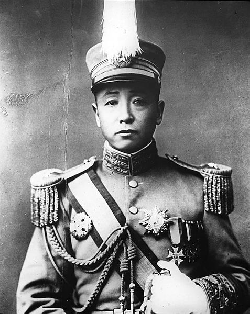
Yahya Khan Part 2
Presidents
- Life
- 4 February 1917 – 10 August 1980
- Birthday
- February 4
- Field
- State, Presidents
- Length
- 4 parts
The original plan envisioned taking control of the major cities on 26 March 1971, and then eliminating all opposition, political or military,Salik, Siddiq, Witness To Surrender, p63, p228-9 id = ISBN 984-05-1373-7 within one month. The prolonged Bengali resistance was not anticipated by Pakistani planners.Pakistan Defence Journal, 1977, Vol 2, p2-3 The main phase of Operation Searchlight ended with the fall of the last major town in Bengali hands in mid May.
The total number of people killed in East Pakistan is not known with any degree of accuracy. Bangladeshi authorities claim that 3 million people were killed,White, Matthew, while the Hamoodur Rahman Commission, an official Pakistan Government investigation, put the figure as low as 26,000 civilian casualties., , paragraph 33 The international media and reference books in English have also published figures which vary greatly from 200,000 to 2,000,000 for Bangladesh as a whole. A further eight to ten million people fled the country to seek safety in India.Rummel, Rudolph J., , ISBN 3-8258-4010-7, Chapter 8, : lowest estimate 2 million claimed by Pakistan (reported by Aziz, Qutubuddin. Blood and tears Karachi: United Press of Pakistan, 1974. pp. 74,226), all the other sources used by Rummel suggest a figure of between 8 and 10 million with one (Johnson, B. L. C. Bangladesh. New York: Barnes & Noble, 1975. pp. 73,75) that "could have been" 12 million.
The Office of the Historian of the United States Department of State held a two-day conference in late June 2005 on U.S. policy in South Asia between 1961 and 1972. Bangladeshi speakers at the conference stated that the official Bangladeshi figure of civilian deaths was close to 300,000, which was wrongly translated from Bengali into English as three million. Ambassador Shamsher M. Chowdhury acknowledged that Bangladesh alone cannot correct this mistake and suggested Pakistan and Bangladesh should form a joint commission to investigate the 1971 disaster and prepare a report.Anwar Iqbal , The Dawn, 7 July 2005, this article was also published in the in , 16 December 2005 under the byline US State Department’s declassified documents A 2008 study in the British Medical Journal concluded that 269,000 civilians were killed by all sides in the war.
Khan arrested Sheikh Mujibur Rahman on charges of Sedition and appointed Brigadier Rahimuddin Khan (later General) to preside over a special tribunal dealing with Mujib’s case. Rahimuddin awarded Mujib the death sentence, and President Yahya put the verdict into abeyance. Yahya’s crackdown, however, had led to a Bangladesh Liberation War within Pakistan, and eventually drew India into what would extend into the Indo-Pakistani War of 1971. The end result was the establishment of Bangladesh as an independent republic. Khan subsequently apologised for his mistakes and voluntarily stepped down.
The US role
As President, Khan helped to establish the communication channel between the United States and the People’s Republic of China, which would be used to set up the Nixon trip in 1972.
Pakistan was perceived in the United States as an integral bulwark against Communism in the Cold War. The United States cautiously supported Pakistan during 1971 although congress kept in place an arms embargo. India, with a heavily Socialistic economy, signed a formal alliance with the Soviet Union in August 1971. Both Nixon and Secretary of State Henry Kissinger felt that the atrocities committed by Pakistan in Bangladesh were greatly exaggerated for propaganda purposes. Moreover, noting that India was using the violence committed by all sides during this Pakistani civil war as a pretext for a possible military intervention, they suspected that India had aggressive intentions.
Kissinger would work to prevent sectarian conflicts in Yemen and Lebanon from devolving into regional wars under Presidents Nixon and Ford. With the Soviet Union already covertly engaged in neighbouring Afghanistan, the Nixon administration used Pakistan to try to deter further Soviet encroachment in the region. The Awami League, the dominant political force in Bangladesh, was an explicitly Socialist party aligned with Moscow.
Continue reading: part 3 of 4 →