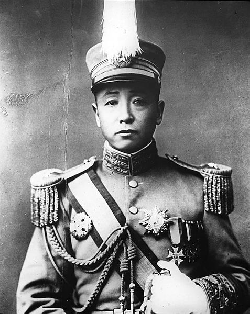
Yahya Khan
Presidents
- Life
- 4 February 1917 – 10 August 1980
- Birthday
- February 4
- Field
- State, Presidents
- Length
- 4 parts
Agha Yahya Khan (Urdu: آغا محمد یحیی خان; February 4, 1917 – August 10, 1980), was a four-star general officer and statesman who served as the 3rd President of Pakistan from 1969 until East Pakistan’s secession to Bangladesh in 1971, and Pakistan’s defeat in the Indo-Pakistani war of the same year. The name of General Yahya Khan is still like an abuse in Pakistan.
Serving with distinction in World War II as a British Indian Army officer, Yahya opted for Pakistan in 1947 and became one of the earliest senior local officers in its army. After helping conduct Operation Grand Slam during the Indo-Pakistani war of 1965, Yahya was made the army’s Commander-in-Chief in 1966. Appointed to succeed him by outgoing president Ayub Khan in 1969, Yahya dissolved the government and declared martial law for the second time in Pakistan’s history. He held the country’s first free and fair elections in 1970, which saw Sheikh Mujibur Rahman’s Awami League party in East Pakistan win the majority vote. Pressured by Zulfikar Ali Bhutto, whose party had won in West Pakistan but had far less votes, Yahya delayed handing over power to Mujib. As civil unrest erupted all over East Pakistan, Yahya initiated Operation Searchlight to quell the rebellion.
With reports of widespread atrocities by the Pakistan Army against Bengali civilians, and counter-killings of Biharis and suspected Pakistani sympathisers by the Mukti Bahini insurgency, the crisis grew deeper under Yahya. In December 1971, regional tensions escalated into the Indo-Pakistani war of 1971, with neighbouring India intervening on the side of the Bengali fighters. Pakistan was defeated on 16 December 1971, with 93,000 of its army officers in Dhaka turning prisoners-of-war, and East Pakistan seceding to become Bangladesh. Yahya handed over the presidency to Bhutto and stepped down as army chief in disgrace.
As the new president, Bhutto stripped Yahya of all previous military decorations and placed him under house arrest for most of the 1970s. When Bhutto was overthrown in a military coup in 1977, Yahya was released by General Fazle Haq. He died in 1980. He is viewed largely negatively by Pakistani historians, and is considered among the least successful of the country’s leaders.
The last days of Pakistani East Bengal
Within a year of 28 July 1969 he had set up a framework for elections that were held in December 1970. In East Pakistan, the Awami League (led by Mujibur Rahman) held almost all of the seats, but none in West Pakistan. In West Pakistan, the Pakistan Peoples Party (led by Zulfiqar Ali Bhutto) won the lion’s share of the seats, but none in East Pakistan. Though Mujib had 162 seats in the National Assembly and Bhutto had 88 of PPP. The election results truly reflected the ugly political reality: the division of the Pakistani electorate along regional lines and political polarization of the country between the two wings, East and West Pakistan. In political terms, therefore, Pakistan as a nation stood divided as a result. Bhutto and Mujib were unable to come to an agreement on the transfer of power from to East Pakistan on the basis of this Six-Point Program. Many felt that the 6 points were a step towards secession. It since emerged that Mujib met Indian diplomats in London according to his daughter in 1969 from where he agreed to secede from Pakistan http://www.pakhistorian.com/?p=498
Yahya Khan ordered a crack down to restore the writ of the government. Operation Searchlight began on 25 March 1971 and extremely worsend order. However, the gulf between the two wings now was too wide to be bridged. Agitation now transformed into a vicious insurgency as Bengali elements of Pakistani armed Forces and Police mutinied and formed Bangladesh Liberationary Forces along with common people of all classes to launch both conventional and hit and run operations.
Operation Searchlight ordered by Yahya was a planned military pacification carried out by the Pakistan Army to curb the Bengali nationalist movement in erstwhile East Pakistan in March 1971Sarmila Bose Economic and Political Weekly Special Articles, 8 October 2005 Ordered by the government in West Pakistan, this was seen as the sequel to Operation Blitz which had been launched in November 1970.
Continue reading: part 2 of 4 →