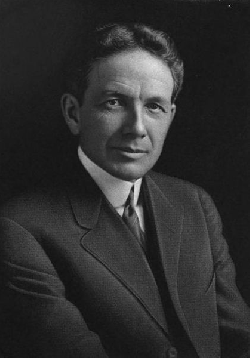
Preston Tucker Part 4
American businessman
- Life
- September 21, 1903 – December 26, 1956
- Birthday
- September 21
- Field
- Founders
- Length
- 6 parts
After 1943, Tucker moved back to Michigan intending to start his own auto company, the Tucker Corporation.
Later life and death (1950-1956)
Preston Tucker’s reputation rebounded after the acquittal. His optimism was remarkable; after the trial was over, he was quoted as saying, "Even Henry Ford failed the first time out". Tucker Corporation assets were auctioned off publicly in Chicago. One remaining Tucker ’48 car was given to Preston Tucker, and another to his mother.
In the early 1950s, Tucker teamed up with investors from Brazil and auto designer Alexis de Sakhnoffsky to build a sports car called the Carioca. Tucker could not use the Tucker name for the car, as Peter Dun, of Dun and Bradstreet, had purchased the rights to the name. The Tucker Carioca was never developed.
Tucker’s travels to Brazil were plagued by fatigue and, upon his return to the United States, he was diagnosed with lung cancer. Tucker died from pneumonia as a complication of lung cancer on December 26, 1956, at the age of 53. While the death certificate read "pneumonia", according to Alex Tremulis, the real cause of death was "a broken heart."Egan, Philip S.; Design and Destiny: The Making of the Tucker Automobile; On the Mark Publications; 1989 Tucker is buried at Michigan Memorial Park in Flat Rock, Michigan.
SEC trial and demise of the Tucker Corporation (1949-1950)
In 1949, Tucker surrendered his corporate records to the U.S. Securities and Exchange Commission. United States Attorney Otto Kerner, Jr. began a grand jury investigation in February 1949. On March 3, 1949, a federal judge handed control of the Tucker Corporation over to Aaron J. Colnon and John H. Schatz. Soon thereafter on June 10, 1949, Tucker and six other Tucker Corporation executives were indicted on 25 counts of mail fraud, five counts of violations of SEC regulations and one count of conspiracy to defraud. The indictment included 46-year-old Tucker, Harold A. Karsten, 58, "alias Abe Karatz"; Floyd D. Cerf, 61 (whose firm had handled the stock offering); Robert Pierce, 63; Fred Rockelman, 64; Mitchell W. Dulian, 50, Tucker sales manager; Otis Radford, 42, Tucker Corporation comptroller; and Cliff Knoble, 42, Tucker advertising manager.
Tucker publicly called the charges "silly and ridiculous" and hailed the indictment as "an opportunity to explain our side of the story". Tucker and his colleagues’ defense was handled by a team of attorneys led by William T. Kirby.
Another publication, Collier’s magazine, ran an article critical of Tucker on June 25, 1949, which included leaked details of the SEC report (which was never released publicly). This article was reprinted in Readers Digest as well, expanding the scope of the negative press concerning Preston Tucker.
The trial began on October 4, 1949, presided over by Judge Walter J. LaBuy. Tucker Corporation’s factory was closed on the very same day. At that point, only 37 Tucker ’48s had been built. A corps of 300 loyal employees returned to the factory (some without pay) and finished assembly of another 13 cars for a total production of 50 cars (not including the prototype).
At trial, the government contended that Tucker never intended to produce a car. Throughout the trial, the SEC report on Tucker was classified as "secret" and Tucker’s attorneys were never allowed to view or read it, but it was leaked to the press nevertheless.
As the trial proceeded, the government and SEC brought several witnesses (mostly former Tucker employees) to highlight the rudimentary methods used by Tucker to develop the car; the early suspensions were installed three times before they worked, and early parts were taken from junkyards to build the prototype. Answering back in Tucker’s defense, designer Alex Tremulis testified that it was common industry practice to use old car parts for prototype builds, and pointed out this had been done when he was involved with developing the 1942 Oldsmobile under General Motors.
Continue reading: part 5 of 6 →