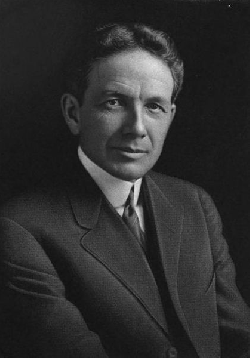
Wallace Fard Muhammad
Founders
- Life
- February 26, 1893
- Birthday
- February 26
- Field
- Founders
- Length
- 5 parts
Wallace Fard Muhammad (born 26 February 1893) was the founder of the Nation of Islam, an African-American religion and empowerment organization. He arrived in Detroit in 1930 with an obscure background and several aliases, where he taught a distinctive form of Islam among the city’s African-American population. He disappeared in 1934 after several disputes with local authorities.
In popular culture
A reinterpretation of the historical mantle exists in Jeffrey Eugenides’s novel Middlesex, which won the 2003 Pulitzer Prize for fiction. In the story, Fard’s real name is Jimmy Zizmo, and he is a small time bootlegger of rumored Greek-Turkish-Pontian descent who fakes his death upon suspecting that his wife is having an affair and that he is not the father to their daughter. Having convinced everyone that he is dead, he assumes the Fard identity, apparently out of a desire to reaffirm his Turkish roots. Just as in real life, the Fard-Zizmo character disappears after the ritual murder scandal.
Wallace Dodd Ford
Historians have used public records to identify Fard as Wallace Dodd Ford, a former restaurateur and Moorish Science Temple leader.
In 2001, Nation of Islam chronicler Karl Evanzz stated that Fard was the son of Zared Fard, a New Zealander of East Indian extraction, and his wife Beatrice, part of New Zealand’s British population.Evanzz, Karl (2001) The Messenger: The Rise and Fall of Elijah Muhammad, Random House/Vintage, ISBN 978-0-679-77406-8, p. 399. However, recent research has indicated that the Department for Internal Affairs in New Zealand has no record of Fard’s birth or the birth or death of these alleged parents.Gibson, Dawn-Marie (2012) A History of the Nation of Islam: Race, Islam, and the Quest for Freedom, Praeger, ISBN 978-0-313-39807-0, p. 24-25.
Evanzz goes on to state that Fard, using the name Fred Dodd, married Pearl Allen in Multnomah County, Oregon on May 9, 1914 with their first child, a son, born the next year.
Dodd/Fard left his family in 1916 and moved to Los Angeles using the name Wallie Dodd Fard. A World War I draft registration card for Wallace Dodd Ford, from 1917, indicated he was living in Los Angeles, California, unmarried, as a restaurant owner, and reported that he was born in Shinka, Afghanistan on February 26, 1893. He was described as being of medium height and build with brown eyes and black hair.Ancestry.com database, Registration Location: Los Angeles County, California; Roll: 1530899; Draft Board: 17
As of 1920, he was still living in Los Angeles, as 26 year-old Wallie D. Ford, with his 25 year-old wife, Hazel. In the 1920 United States Census he reported his race as white, his occupation as a proprietor of a restaurant, and gave his place of birth as New Zealand. He provided no known place of birth for his parents, nor his date of immigration.1920 Federal U.S. Census, Los Angeles City, Enumeration District 206, Sheet 10B On June 5, 1924, one Wallie Dodd Ford was wed to Carmen Frevino (or Trevino) in Orange County, California. Ford reported he was a cook, age 26, born in Oregon, but living in Los Angeles. He reported he was of "Spanish" race. His parents names are given as Zaradodd Ford of "Madrad, Span" (presumably Madrid, Spain) and Babbjie. California State Board of Health, County of Orange, Certificate of Marriage, Local Registered No. 1768, as located in "California, County Marriages, 1850-1952," index and images, FamilySearch (https://familysearch.org/pal:/MM9.1.1/K8FM-5FP : accessed 05 Jan 2013), Wallie Dodd Ford and Carmen Frevino, 1924. In 1926, Ford was arrested and imprisoned for attempting to sell drugs to an undercover police officer, serving three years in San Quentin State Prison. After he was released in 1929, he disappeared from the public record until "Wallace Fard" was arrested in 1932. He was identified as Wallace Dodd Ford on the basis of photographs and matching fingerprints.