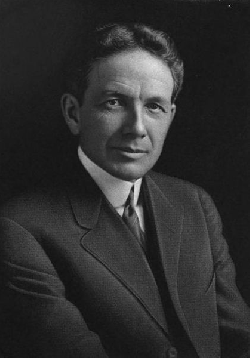
William Booth Part 4
Founder of the Salvation Army
- Life
- 10 April 1829 – 20 August 1912
- Birthday
- April 10
- Field
- Founders
- Length
- 5 parts
Other accusations centred around the fact that Booth appointed his own children to posts for which others were better qualified, leading to claims that The Salvation Army was a Booth family-business. For example, he appointed his daughter Emma Booth as the Principal of the Officers’ Training Home, The Salvation Army’s first training school for women when she was just 19. Others believed that Booth was creating a dynasty, as was suggested by the fact that he insisted that his sons-in-law added ‘Booth’ to their own names (see Frederick Booth-Tucker and Arthur Booth-Clibborn).Hodges, Samuel Horatio General Booth: “the Family,” and the Salvation Army: Showing its Rise, Progress, and … Decline (1890) This was further borne out when Booth appointed his son, Bramwell Booth, as his successor as General in his will. However, William Booth had once said to his children that "The Salvation Army does not belong to you, or to me, it belongs to the world" and was very wary of the leadership of the Army becoming a dynasty.
The press was often hostile to Booth and The Salvation Army as well because their methods and message were widely misinterpreted. The Army’s motto ‘Blood & Fire’, which had deep theological meaning representing the saving ‘blood of Jesus’ and the sanctifying ‘fire of the Holy Spirit’, was erroneously thought to mean the blood of sinners and the fire of hell. There was also suspicion about the Army’s motives, with Booth often portrayed as a charlatan only out to make money. ourchurch.com
The Church of England was at first also extremely hostile to the activities of Booth and The Salvation Army. The philanthropist, politician and evangelist Lord Shaftesbury even went so far as to describe Booth as the "Anti-Christ". One of the main complaints against Booth was his "elevation of women to man’s status". on Spartacus Educational Many found him dictatorial and hard to work with. Some of his own children denounced him as their leader and turned their backs on The Salvation Army, including his daughter Kate Booth and his sons Herbert and Ballington Booth, the latter founding a separate organisation, the Volunteers of America with himself as ‘General’. The evangelist Rodney "Gipsy" Smith left him because of his rigidity and D.L. Moody would not support him because he felt there was a threat to the local Church. But no one could deny his compassion for the sufferings of his fellow man., the Gospel Truth website
Works
- In Darkest England and The Way Out Diggory Press, ISBN 978-1-84685-377-7
- Purity of Heart Diggory Press, ISBN 978-1-84685-376-0
- Boundless Salvation: The Shorter Writings of William Booth, Edited by Andrew M. Eason and Roger J. Green. New York: Peter Lang, 2012. ISBN 978-1-4539-0201-1
The Christian Mission
Manifesto of The Christian Mission as a "Volunteer Army" (1878)
In 1865 Booth was in the East End of London, preaching to crowds of people in the streets. Outside The Blind Beggar public house some missioners heard him speaking and were so impressed by his preaching that they invited him to lead a series of meetings they were holding in a large tent.
The tent was set up on an old Quaker burial ground on Mile End Waste in Whitechapel. The first of these meetings was held on 2 July 1865. To the poor and destitute of London’s East End, Booth brought the good news of Jesus Christ and his love for all., ‘The Salvation Army International Heritage Centre’ website
Booth soon realised he had found his destiny, and later in 1865 he and his wife Catherine opened ‘The Christian Revival Society’ in the East End of London, where they held meetings every evening and on Sundays, to share the repentance that salvation can bring through accepting Jesus Christ as Lord and Savior to the poorest and most needy, including alcoholics, criminals and prostitutes. The Christian Revival Society was later renamed The Christian Mission.
Slowly The Christian Mission began to grow but the work was difficult and Booth would "stumble home night after night haggard with fatigue, often his clothes were torn and bloody bandages swathed his head where a stone had struck", wrote his wife. Evening meetings were held in an old warehouse where urchins threw stones and fireworks through the window. Outposts were eventually established and in time attracted converts, yet the results were discouraging. The Christian Mission was just one of about 500 charitable and religious groups trying to help the poor and needy in London’s East End.
Continue reading: part 5 of 5 →