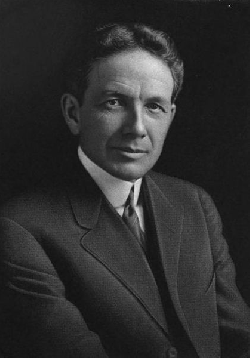
William Booth Part 2
Founder of the Salvation Army
- Life
- 10 April 1829 – 20 August 1912
- Birthday
- April 10
- Field
- Founders
- Length
- 5 parts
Booth regularly published a magazine and was the author of a number of books; he also composed several songs. His book not only became a best-seller after its 1890 release, it set the foundation for the Army’s modern social welfare approach. It compared what was considered "civilised" England with "Darkest Africa" – a land then considered poor and backward. What Booth suggested was that much of London and greater England after the Industrial Revolution was not better off in the quality of life than those in the underdeveloped world. General Booth in later years He proposed a strategy to apply the Christian Gospel and work ethic to the problems. The book speaks of abolishing vice and poverty by establishing homes for the homeless, farm communities where the urban poor can be trained in agriculture, training centres for prospective emigrants, homes for fallen women and released prisoners, aid for the poor, and help for drunkards. He also lays down schemes for poor men’s lawyers, banks, clinics, industrial schools and even a seaside resort. He says that if the state fails to meet its social obligations it will be the task of each Christian to step into the breach. However, Booth was not departing from his spiritual convictions to set up a socialist or communist society or sub-class, supported by people forced to finance his plans; Booth’s ultimate aim was to get people "saved."
Booth asserts in his introduction,
It was asserted in some circles that In Darkest England was actually written by the crusading journalist, W.T. Stead, who, in his own words, acted as a "literary hack" for the General when Mrs. Booth lay dying. However, this assumption was swiftly dismissed by Stead some years later, declaring that, "The idea of Darkest England.. was the General’s own. My part, of which I had no wish to speak.. was strictly subordinate throughout.Quoted in Robert Sandall, The History of the Salvation Army, vol. III, 1883–1953, Social Reform and Welfare Work (1955) Appendix B, pp. 324–32
In Darkest England and the Way Out was reprinted several times and lately in 2006.
Later years
Booth and his granddaughter [[Catherine Bramwell-Booth during the 1904 motorcade]]
Opinion of The Salvation Army and William Booth eventually changed to that of favour. In his later years, he was received in audience by kings, emperors and presidents, who were among his ardent admirers. Even the mass media began to use his title of ‘General’ with reverence.
In 1899, Booth suffered from blindness in both eyes, but with a short rest, was able to recover his sight. In 1904 he took part in a ‘motorcade’ when he was driven around Great Britain, stopping off in cities, towns and villages to preach to the assembled crowds from inside his open-top car. In 1906 Booth was made a Freeman of the City of London, and was granted an honorary degree from the University of Oxford. In 1902 he was invited to attend the coronation of King Edward VII.
His last visit to the United States was made in 1907, and in 1909 he embarked on a six month motor tour of the United Kingdom. During this tour he discovered he was blind in his right eye and the sight in his left eye was dimmed by cataracts. The rest of the tour had to be cancelled. On 21 August 1909 a surgeon at Guy’s Hospital removed his right eye. Despite this setback, in 1910 Booth campaigned in Holland, Denmark, Germany, Switzerland and Italy. On his return to England he embarked on his seventh and last motor tour.
William Booth was 83 years old when he died (or was Promoted to Glory) at his home in Hadley Wood, London. At the three day lying in state at Clapton Congress Hall 150,000 people filed past his casket. On 27 August 1912 Booth’s funeral service was held at London’s Olympia where 40,000 people attended, including Queen Mary, who sat almost unrecognised far to the rear of the great hall.
The following day Booth’s funeral procession set out from International Headquarters. As it moved off 10,000 uniformed Salvationists fell in behind. Forty Salvation Army bands played the ‘Dead March’ from Handel’s Saul as the vast procession set off. He was buried with his wife Catherine Booth in the main London burial ground for 19th century non-conformist ministers and tutors, the non-denominational Abney Park Cemetery in Stoke Newington.
Continue reading: part 3 of 5 →