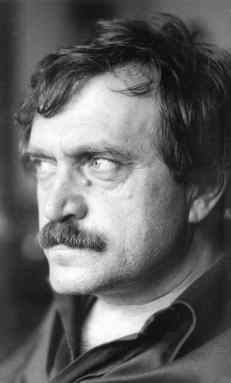
Vasily Aksyonov
Soviet writer
- Life
- August 20, 1932 – July 6, 2009
- Birthday
- August 20
- Field
- Art, Literature
- Length
- 3 parts
Vasily Pavlovich Aksyonov ( August 20, 1932 – July 6, 2009) was a Soviet and Russian novelist. He is known in the West as the author of The Burn (Ожог, Ozhog, from 1975) and Generations of Winter (Московская сага, Moskovskaya Saga, from 1992), a family saga depicting three generations of the Gradov family between 1925 and 1953.
Career
Reportedly, "during the liberalisation that followed Stalin’s death in 1953, Aksyonov came into contact with the first Soviet countercultural movement of zoot-suited hipsters called stilyagi (the ones ‘with style’)." As a result
He fell in love with their slang, fashions, libertine lifestyles, dancing and especially their music. From this point on began his lifelong romance with jazz. Interest in his new milieu, western music, fashion and literature turned out to be life-changing for Aksyonov, who decided to dedicate himself to chronicling his times through literature. He remained a keen observer of youth, with its ever-changing styles, movements and trends. Like no other Soviet writer, he was attuned to the developments and changes in popular culture.
In 1956, he was "discovered" and heralded by the Soviet writer Valentin Kataev for his first publication, in the liberal magazine Youth. "His first novel, Colleagues (1961), was based on his experiences as a doctor." "His second, Ticket to the Stars (1961), depicting the life of Soviet youthful hipsters, made him an overnight celebrity."
In the 1960s Aksyonov was a frequent contributor to the popular "Yunost" ("Youth") magazine, and eventually became a staff writer. Aksyonov thus reportedly became "a leading figure in the so-called ‘youth prose’ movement and a darling of the Soviet liberal intelligentsia and their western supporters: his writings stood in marked contrast to the dreary, socialist-realist prose of the time."Obituary: Vasily Aksyonov: Libertarian Russian writer and leading light in ‘youth prose’, he fell foul of the KGB. Mark Yoffe. The Guardian (London) – Final Edition July 16, 2009. GUARDIAN OBITUARIES PAGES; Pg. 34. "Aksyonov’s characters spoke in a natural way, using hip lingo, they went to bars and dance halls, had premarital sex, listened to jazz and rock’n’roll and hustled to score a pair of cool American shoes." "There was a feeling of freshness and freedom about his writings, similar to the one emanating from black-market recordings of American jazz and pop." "He soon became one of the informal leaders of the Shestidesyatniki – which translates roughly as "the ’60s generation" – a group of young Soviets who resisted the Communist Party’s cultural and ideological restrictions." "’It was amazing: We were being brought up robots, but we began to listen to jazz,’ Aksyonov said in a 2007 documentary about him."
For all his hardship, Aksyonov,
as a prose stylist, was at the opposite pole from Mr. Solzhenitsyn, becoming a symbol of youthful promise and embracing fashion and jazz rather than dwelling on the miseries of the gulag. Ultimately, however, he shared Mr. Solzhenitsyn’s fate of exile from the Soviet Union.
Solzhenitsyn is all about the imprisonment and trying to get out, and Aksyonov is the young person whose mother got out and he actually can live his life now, said Nina L. Khrushcheva, who is a great-granddaughter of Nikita Khrushchev and a friend of the Aksyonov family and who teaches international affairs at the New School in New York. It was important to have the Aksyonov light, that light of personal freedom and personal self-expression.
However, Aksyonov’s "open pro-Americanism and liberal values eventually led to problems with the KGB." "And his involvement in 1979 with an independent magazine, Metropol, led to an open confrontation with the authorities." His next two celebrated and dissident novels, The Burn and The Island of Crimea, could not be published in the USSR. "The former explored the plight of intellectuals under communism and the latter was an imagining of what life might have been like had the white army staved off the Bolsheviks in 1917."
Continue reading: part 2 of 3 →

