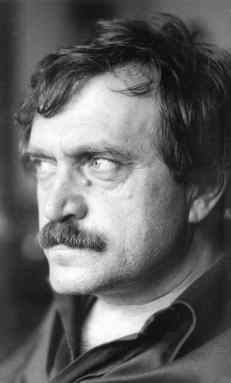
Umberto Eco Part 2
- Life
- 05 January 1932
- Birthday
- January 5
- Field
- Art, Literature
- Length
- 5 parts
In 1967 he gave the influential lecture Towards a Semiological Guerrilla Warfare,. which coined the influential term "semiological guerrilla," and influenced the theorization of guerrilla tactics against mainstream mass media culture, such as guerrilla television and culture jamming. Among the expressions used in the essay, are "communications guerrilla warfare" and "cultural guerrilla."Eco (1967)Bondanella (2005) pp. 53, 88–9. The essay was later included in Eco’s book Faith in Fakes.
Semiotics
Eco founded and developed one of the most important approaches in contemporary semiotics, usually referred to as interpretative semiotics. The main books in which he elaborates his theory are La struttura assente (literally: The Absent Structure), A Theory of Semiotics (1975), The Role of the Reader (1979), Semiotics and Philosophy of Language (1984), The Limits of Interpretation (1990) and Kant and the Platypus (1997).
Eco co-founded Versus: Quaderni di studi semiotici (known as VS among Italian academics), an influential semiotic journal. VS has become an important publication platform for many scholars whose work is related to signs and signification. The journal’s foundation and activities have contributed to the growing influence of semiotics as an academic field in its own right, both in Italy and in the rest of Europe. Most of the well-known European semioticians, among them Eco, A.J. Greimas, Jean-Marie Floch, Jacques Fontanille, have published original articles in VS, as well as philosophers and linguists like John Searle and George Lakoff.
Anthropology
In 1988, at the University of Bologna, Eco created an unusual program called Anthropology of the West from the perspective of non-Westerners (African and Chinese scholars), as defined by their own criteria. Eco developed this transcultural international network based on the idea of Alain le Pichon in West Africa. The Bologna program resulted in a first conference in Guangzhou, China, in 1991 entitled "Frontiers of Knowledge." The first event was soon followed by an Itinerant Euro-Chinese seminar on "Misunderstandings in the Quest for the Universal" along the silk trade route from Canton to Beijing. The latter culminated in a book entitled The Unicorn and the Dragon, which discussed the question of the creation of knowledge in China and in Europe. Scholars contributing to this volume were from China, including Tang Yijie, Wang Bin and Yue Dayun, as well as from Europe: Furio Colombo, Antoine Danchin, Jacques Le Goff, Paolo Fabbri, Alain Rey..
In 2000 a seminar in Timbuktu (Mali), was followed by another gathering in Bologna to reflect on the conditions of reciprocal knowledge between East and West. This in turn gave rise to a series of conferences in Brussels, Paris, and Goa, culminating in Beijing in 2007. The topics of the Beijing conference were "Order and Disorder","New Concepts of War and Peace", "Human Rights" and "Social Justice and Harmony". Eco presented the opening lecture. The following anthropologists gave presentations: from India (Balveer Arora, Varun Sahni, Rukmini Bhaya Nair); from Africa (Moussa Sow); from Europe (Roland Marti, Maurice Olender); from Korea (Cha Insuk); from China (Huang Ping, Zhao Tinyang). Also on the program were scholars from the domains of law or science: Antoine Danchin, Ahmed Djebbar, Dieter Grimm.. Considers, among other things, encyclopedias. Eco’s interest in East/West dialogue to facilitate international communication and understanding also correlates with his related interest in the international auxiliary language Esperanto.
Style and works
Themes
Eco’s fiction has enjoyed a wide audience around the world, with many translations. His novels are full of subtle, often multilingual, references to literature and history and his dense, intricate plots tend to take dizzying turns. Eco’s work illustrates the concept of intertextuality, or the inter-connectedness of all literary works. Eco cites James Joyce and Jorge Luis Borges as the two modern authors who have influenced his work the most.Eco (2006) On Literature Vintage
Continue reading: part 3 of 5 →