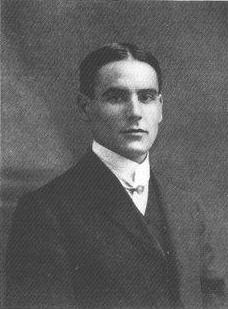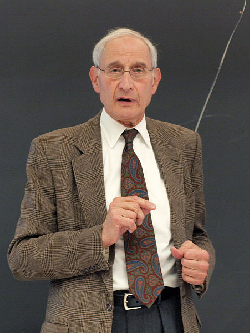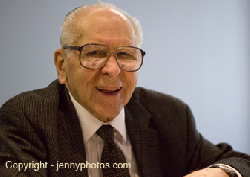
Thomas Szasz Part 5
Psychiatrist
- Life
- April 15, 1920 – September 8, 2012.
- Birthday
- April 15
- Field
- Science - Other
- Length
- 6 parts
Believing that psychiatric hospitals are like prisons not hospitals and that psychiatrists who subject others to coercion function as judges and jailers not physicians, Szasz has made efforts to abolish involuntary psychiatric hospitalization for over two decades, and in 1970 took a part in founding the American Association for the Abolition of Involuntary Mental Hospitalization (AAAIMH). Its founding was announced by Szasz in 1971 on the American Journal of Psychiatry and American Journal of Public Health. The association provided legal help to psychiatric patients and published a journal, The Abolitionist.
The rise of Szasz’s arguments
Szasz first presented his attack on "mental illness" as a legal term in 1958 in the Columbia Law Review. In his article he argued that mental illness was no more a fact bearing on a suspect’s guilt than is possession by the devil.
In 1961 Szasz gave testimony before a United States Senate committee in which he argued that the use of mental hospitals to incarcerate people defined as insane violated the general assumptions of patient-and-doctor relationships and turned the doctor into a warden and a keeper of a prison.
Writings by Szasz
of Szasz’s writings.
Books
- (First published in 1976 under the name: Karl Kraus and the Soul-Doctors: A Pioneer Critic and His Criticism of Psychiatry and Psychoanalysis. – Louisiana State University Press, 1976.)
Criticism
According to American psychiatrist Allen Frances, Szasz "goes too far and draws bright lines where there are shades of gray". In particular, Szasz was right that schizophrenia is no "disease", but that doesn’t mean schizophrenia is a "myth." Szasz was also right that psychiatric diagnosis can be misunderstood and misused, but that doesn’t mean it can be dispensed with. Frances adds that Szasz was correct in defining many problems related to psychiatric diagnosis, but he doesn’t offer alternative solutions.
The effectiveness of medication has been used as an argument against Szasz’s idea that depression is a myth. In a debate with Szasz, Donald F. Klein, M.D explained: "It is that elementary fact, that the antidepressants do little to normals, and are tremendously effective in the clinically depressed person, that shows us that this is an illness".
But as the New England Journal of Medicine reported on January 17, 2008, in published trials, about 60 percent of people taking the drugs report significant relief from depression, compared with roughly 40 percent of those on placebo pills. But when the less positive, unpublished trials are included, the advantage shrinks: the drugs outperform placebos, but perhaps only by a modest margin and for a brief period.http://content.nejm.org/cgi/content/short/358/3/252 In the same debate Frederick K. Goodwin, M.D, asserts: "The concept of disease in medicine really means a cluster of symptoms that people can agree about, and in the case of depression we agree 80% of the time. It is a cluster of symptoms that predicts something".
Awards
Szasz was honored with over fifty prestigious awards including:
- the Martin Buber Award (1974);
- the Humanist Laureate Award (1995);
- the Great Lake Association of Clinical Medicine Patients’ Rights Advocate Award (1995);
- the American Psychological Association Rollo May Award (1998).
Russell Tribunal
In the summer of 2001, Szasz took a part in a Russell Tribunal on Human rights in Psychiatry held in Berlin between June 30 and July 2, 2001. The tribunal brought in the two following verdicts: the majority verdict claimed that there was "serious abuse of human rights in psychiatry" and that psychiatry was "guilty of the combination of force and unaccountability"; the minority verdict, signed by the Israeli Law Professor Alon Harel and Brazilian novelist Paulo Coelho, called for "public critical examination of the role of psychiatry."
Continue reading: part 6 of 6 →