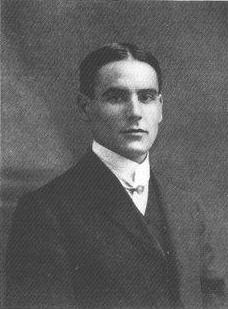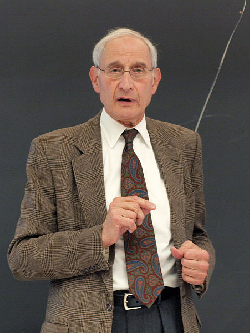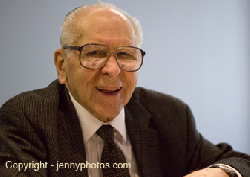
Thomas Szasz
Psychiatrist
- Life
- April 15, 1920 – September 8, 2012.
- Birthday
- April 15
- Field
- Science - Other
- Length
- 6 parts
Thomas Stephen Szasz ( April 15, 1920 – September 8, 2012). was a psychiatrist and academic. Since 1990. he had been professor emeritus of psychiatry at the State University of New York Upstate Medical University in Syracuse. He was a well-known social critic of the moral and scientific foundations of psychiatry, and of the social control aims of medicine in modern society, as well as of scientism. His books The Myth of Mental Illness (1960) and The Manufacture of Madness (1970) set out some of the arguments with which he is most associated.
Szasz argued that mental illnesses are not real in the sense that cancers are real. Except for a few identifiable brain diseases, such as Alzheimer’s disease, there are “neither biological or chemical tests nor biopsy or necropsy findings for verifying or falsifying DSM diagnoses." There are no objective methods for detecting the presence or absence of mental disease.
His views on special treatment followed from libertarian roots which are based on the principles that each person has the right to bodily and mental self-ownership and the right to be free from violence from others, although he criticized the "Free World" as well as the communist states for their use of psychiatry. He believed that suicide, the practice of medicine, the use and sale of drugs and sexual relations should be private, contractual, and legal.
In 1973 the American Humanist Association named him Humanist of the Year, and in 1979 he was honored with an honorary doctorate in behavioral science at Universidad Francisco Marroquín.
Life
Szasz was born to Jewish parents Gyula and Lily Szász on April 15, 1920, in Budapest, Hungary. In 1938, Szasz moved to the United States, where he attended the University of Cincinnati for his Bachelor of Science in medicine, and received his medical degree from the same university in 1944. Szasz completed his residency requirement at the Cincinnati General Hospital, then worked at the Chicago Institute for Psychoanalysis from 1951–56, and then for the next five years was a member of its staff – taking twenty-four months out for active duty with the U.S. Navy.
In 1962 Szasz received a tenured position in medicine at the State University of New York. Szasz had first joined SUNY in 1956.
Szasz’s views of psychiatry were influenced by the writings of Frigyes Karinthy.
Szasz’s main arguments
As Szasz said, having become convinced of the metaphorical character of mental disorders, the frequent injuriousness of psychiatric treatments, the immorality of psychiatric coercions and excuses, he set himself a task to delegitimize the legitimating agencies and authorities and their vast powers, enforced by psychiatrists and other mental health professionals, mental health laws, mental health courts, and mental health sentences.
Szasz was a critic of the influence of modern medicine on society, which he considered to be the secularisation of religion’s hold on humankind. Criticizing scientism, he targeted in particular psychiatry, underscoring its campaigns against masturbation at the end of the 19th century, its use of medical imagery and language to describe misbehavior, its reliance on involuntary mental hospitalization to protect society, or the use of lobotomy and other interventions to treat psychosis. To sum up his description of the political influence of medicine in modern societies imbued by faith in science, he declared: Since theocracy is the rule of God or its priests, and democracy the rule of the people or of the majority, pharmacracy is therefore the rule of medicine or of doctors.T. Szasz, Ceremonial Chemistry, 1974
Szasz consistently paid attention to the power of language in the establishment and maintenance of the social order, both in small interpersonal as well as wider socio-political spheres: The struggle for definition is veritably the struggle for life itself. In the typical Western two men fight desperately for the possession of a gun that has been thrown to the ground: whoever reaches the weapon first shoots and lives; his adversary is shot and dies. In ordinary life, the struggle is not for guns but for words; whoever first defines the situation is the victor; his adversary, the victim. For example, in the family, husband and wife, mother and child do not get along; who defines whom as troublesome or mentally sick?…[the one] who first seizes the word imposes reality on the other; [the one] who defines thus dominates and lives; and [the one] who is defined is subjugated and may be killed.The Second Sin. New York: Doubleday, 1973 His main arguments can be summarised as follows:
Continue reading: part 2 of 6 →