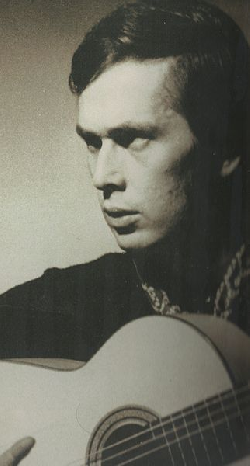
Paco de Lucía
Musician
- Life
- 21 December 1947
- Birthday
- December 21
- Length
- 5 parts
Paco de Lucía (born Francisco Sánchez Gómez on 21 December 1947) is a Spanish flamenco guitarist, composer and producer. A leading proponent of the New Flamenco style, he is one of the first flamenco guitarists who has also successfully crossed over into other genres of music such as classical and jazz. Richard Chapman and Eric Clapton, authors of Guitar: Music, History, Players, describe de Lucía as a "titanic figure in the world of flamenco guitar", and Dennis Koster, author of Guitar Atlas, Flamenco, has referred to de Lucía as "one of history's greatest guitarists".
De Lucía is noted for his innovation and colour in harmony and his remarkable dexterity, technique, strength and fluidity in his right hand, capable of executing extremely fast and fluent picados. A master of contrast, he often juxtaposes picados with rasgueados and other techniques and often adds abstract chords and scale tones to his compositions with jazz influences. These innovations saw him play a key role in the development of traditional Flamenco and the evolution of New Flamenco and Latin jazz fusion from the 1970s.
De Lucía achieved acclaim for his recordings with flamenco singer Camarón de la Isla in the 1970s, recording 10 albums together. Some of his best known recordings include "Río Ancho" (later fused with Al Di Meola's "Mediterranean Sundance"), "Entre dos aguas", "La Barrosa", "Ímpetu", "Cepa Andaluza" and "Gloria al Niño Ricardo". His collaborations with the guitarists John McLaughlin, Al Di Meola and Larry Coryell from the late 1970s saw him gain wider popularity outside his native Spain.
In 1981, De Lucía formed the Paco de Lucía Sextet with his brother, singer Pepe de Lucía and guitarist Ramón de Algeciras, and collaborated with jazz pianist Chick Corea on their 1990 album, Zyryab. In 1983 he appeared in Carlos Saura's film Carmen, for which he was also nominated for a BAFTA Award for Best Film Score. In 1992, he performed live at Expo '92 in Seville and a year later on the Plaza Mayor in Madrid.
In 2004, he won the Prince of Asturias Awards in Arts and in 2010, was awarded an honorary doctorate by Berklee College of Music in Boston. Since 2004 he has greatly reduced his live performances in public and has retired from full touring, and now typically only gives several concerts a year, usually in Spain and Germany and at European festivals during the summer months. In 2005, he was nominated for producer of the year by the Latin Grammy Award for La Tana's Tu, Ven a Mi album.
Influence
De Lucía is widely considered to be the world's premier flamenco guitarist and by many to be Spain's greatest musical export.{{cite book|title=Billboard|url=http://books.google.com/books?id=lxAEAAAAMBAJ&pg=PA41|accessdate=4 March 2013|date=18 July 1992|publisher=Nielsen Business Media, Inc.|page=41|id=}} He has had a revolutionary influence on flamenco music both as a composer and otherwise. His influence on flamenco guitar has been compared with that of Andres Segovia's on classical guitar. His album Fuente y Caudal (Fountain and Flow) has been cited by many to have changed the world of flamenco guitar beyond traditional flamenco culture. Along with Enrique Morente and Camarón de la Isla, de Lucia was the first artist to break away from traditional flamenco and form what is now known as nuevo flamenco. As a composer, de Lucía was the first Spanish artist to mix jazz with Andalusian music in a more or less systematic way. This includes, but is not limited to, his collaborations with Di Meola, McLaughlin, and Pedro Iturralde.
De Lucía was influenced primarily by Niño Ricardo, who is considered to be one of the leading figures in the history of flamenco guitar, and Sabicas, who is regarded as the most influential in the development and refinement of the flamenco guitar as a concert instrument at a time when the guitar was an instrument to accompany the singer. Sabicas was an important mentor for de Lucia in the development of his flamenco guitar technique and also as a composer, characterized by melodic structure, rhythmic and harmonic, perfectly consistent from beginning to end, and non-lyrical phrased guitar falsetas when the singer stops singing. Esteban de Sanlucar and Mario Escudero were also a major influence on him and a source of inspiration. According to the biographer Pohren, de Lucia was "fascinated with jazz" and held a deep respect for high-tech jazz musicians and regarded Di Meola, McLaughlin, Coryell and Corea as highly as musicians as he did his flamenco mentors. Despite these influences, according to the Jazz Times, "Most flamenco fans can trace the music's history to either Before Paco or After Paco".
Continue reading: part 2 of 5 →