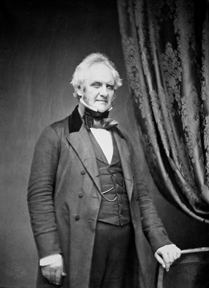
Nikos Kazantzakis Part 3
Philosophers
- Life
- February 18, 1883 – October 26, 1957
- Birthday
- February 18
- Field
- Philosophers
- Length
- 4 parts
Plays
- Julian the Apostate: First staged in Paris, 1948.
- Three Plays: Melissa, Kouros, Christopher Columbus, translated by Athena Gianakas-Dallas, New York: Simon and Schuster, 1969.
- Christopher Columbus, translated by Athena Gianakas-Dallas, Kentfield (CA): Allen Press, 1972. Edition limited to 140 copies.
- From Odysseus, A Drama, partial translation by M. Byron Raizis, "The Literary Review" 16, No. 3 (Spring 1973), p. 352.
- Comedy: A Tragedy in One Act, translated by Kimon Friar, "The Literary Review" 18, No. 4 (Summer 1975), pp. 417–454 .
- Sodom and Gomorrah, A Play, translated by Kimon Friar, "The Literary Review" 19, No. 2 (Winter 1976), pp. 122–256 (62).
- Two plays: Sodom and Gomorrah and Comedy: A Tragedy in One Act, translated by Kimon Friar, Minneapolis: North Central Publishing Co., 1982.
- Buddha, translated by Kimon Friar and Athena Dallas-Damis, San Diego (CA): Avant Books, 1983.
Memoirs, Essays and Letters
- The Saviors of God: Spiritual Exercises, translated by Kimon Friar, New York: Simon and Schuster, 1960.
- Report to Greco, translated by Peter A. Bien, New York: Simon and Schuster, 1965; Oxford: Bruno Cassirer, 1965; London: Faber and Faber, 1965; New York: Bantan Books, 1971.
- Symposium, translated by Theodora Vasils e Themi Vasils, New York: Thomas Y. Crowell Company, 1974; New York: Minerva Press, 1974.
- Friedrich Nietzsche on the Philosophy of Right and the State, translated by O. Makridis, New York: State University of NY Press, 2007.
- From The Saviors of God: Spiritual Exercises, translated by Kimon Friar, "The Charioteer", No. 1 (Summer 1960), pp. 40–51; reprinted in "The Charioteer" 22 and 23 (1980/1981), pp. 116–129 .
- The Suffering God: Selected Letters to Galatea and to Papastephanou, translated by Philip Ramp and Katerina Anghelaki Rooke, New Rochelle (NY): Caratzas Brothers, 1979.
- The Angels of Cyprus, translated by Amy Mims, in Cyprus ‘74: Aphrodite’s Other Face, edited by Emmanuel C. Casdaglis, Athens: National Bank of Greece, 1976.
- Burn Me to Ashes: An Excerpt, translated by Kimon Friar, "Greek Heritage" 1, No. 2 (Spring 1964), pp. 61-64.
- Christ (poetry), translated by Kimon Friar, "Journal of Hellenic Diaspora" (JHD) 10, No. 4 (Winter 1983), pp. 47-51 (60).
- Drama and Contemporary Man, An Essay, translated by Peter Bien, "The Literary Review" 19, No. 2 (Winter 1976), pp. 15-121 .
- "He Wants to Be Free – Kill Him!" A Story, translated by Athena G. Dallas, "Greek Heritage" 1, No. 1 (Winter 1963), pp. 78–82.
- The Homeric G.B.S., "The Shaw Review" 18, No. 3 (Sept. 1975), pp. 91–92. Greek original written for a 1946 Greek language radio broadcast by BBC Overseas Service, on the occasion of George Bernard Shaw’s 90th birthday.
- Hymn (Allegorical), translated by M. Byron Raizis, "Spirit" 37, No. 3 (Fall 1970), pp. 16–17.
- Two Dreams, translated by Peter Mackridge, "Omphalos" 1, No. 2 (Summer 1972), p. 3.
- Peter Bien (ed. and tr.), The Selected Letters of Nikos Kazantzakis (Princeton, PUP, 2011) (Princeton Modern Greek Studies).
Anthologies
- A Tiny Anthology of Kazantzakis. Remarks on the Drama, 1910-1957, compiled by Peter Bien, "The Literary Review" 18, No. 4 (Summer 1975), pp. 455–459 .
Biography
When Kazantzakis was born in 1883 in Heraklion, Crete had not yet joined the modern Greek state, (which had been established in 1832) and was still under the rule of the Ottoman Empire. From 1902 Kazantzakis studied law at the University of Athens, then went to Paris in 1907 to study philosophy. Here he fell under the influence of Henri Bergson. His 1909 dissertation was titled "Friedrich Nietzsche on the Philosophy of Right and the State." Upon his return to Greece, he began translating works of philosophy. In 1914 he met Angelos Sikelianos. Together they travelled for two years in places where Greek Orthodox Christian culture flourished, largely influenced by the enthusiastic nationalism of Sikelianos.
Continue reading: part 4 of 4 →