Wallace Duffield Wright
British general
- Life
- 20 September 1875 - 25 March 1953
- Birthday
- September 20
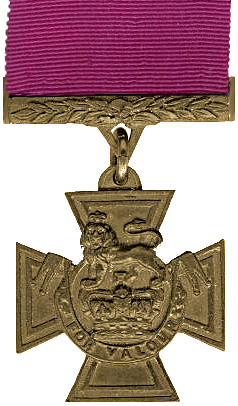
Brigadier General Wallace Duffield Wright VC, CB, CMG, DSO (20 September 1875 – 25 March 1953) was a recipient of the Victoria Cross, the highest and most prestigious award for gallantry in the face of the enemy that can be awarded to British and Commonwealth forces.
As Member of Parliament
In 1928, Wright was elected at a by-election as Conservative Member of Parliament for Tavistock following the death of the sitting MP Philip Kenyon-Slaney. He was re-elected at the 1929 general election, but stood down at the 1931 general election.
His VC is currently on display at The Queen's Royal Surrey Regiment Museum, Clandon Park, Surrey.
Honours and awards
| 40px | Companion of the Order of the Bath (CB) | |
| 40px | Companion of the Order of St Michael and St George (CMG) | 1916 |
| 40px | Companion of the Distinguished Service Order (DSO) | 1918 |
| 40px | East and West Africa Medal | |
| 40px | India Medal | |
| 40px | 1914–15 Star | |
| 40px | British War Medal | |
| 40px | Victory Medal with bronze palm for Mentioned in Dispatches | |
| 40px | Defence Medal | |
| 40px | King George V Silver Jubilee Medal | 1935 |
| 40px | King George VI Coronation Medal | 1937 |
| 40px | Officer of the Legion of Honour | (France) |
Victoria Cross action
Wright was 27 years old, and a lieutenant in the 1st Battalion, The Queen's Royal West Surrey Regiment, employed Northern Nigeria Regiment during the Kano-Sokoto Expedition, in Nigeria.
On 26 February 1903 in Nigeria, "Lieutenant Wright, with only one [other] Officer and 44 men took up a position in the path of the advancing enemy sustained the determined charges of 1,000 Horse and 2,000 Foot for two hours and when the enemy, after heavy losses, fell back in good order, Lieutenant Wright continued to follow them up until they were in full retreat.
The personal example of this Officer, as well as his skilful leadership, contributed largely to the brilliant success of the affair.
He in no way infringed his orders by his daring initiative, as, though warned of the possibility of meeting large bodies of the enemy, he had purposely been left a free hand."London Gazette


