Philippine Airlines Flight 434
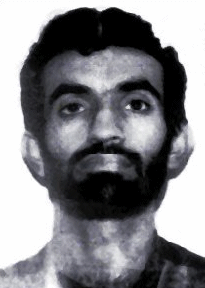
On December 11, 1994, Yousef conducted a trial run of the plan by boarding a Philippine Airlines Boeing 747 designated as PAL434 from Manila to Tokyo, Japan, with a stopover in the Philippine city of Cebu. His identity for the flight was that of an Italian man named Armaldo Forlani. The cabin crew for this leg of the flight later told investigators that Yousef changed seats several times during the relatively short flight, with his last seat change coming after a return from the lavatory."Bomb on Board," Mayday season 3, episode 6. First aired 2005.
Yousef assembled a bomb in the lavatory, set the timer to detonate four hours later, and put it in the lifejacket pocket under seat 26K on the right-hand side of the fuselage., GlobalSecurity.Org report on incident The domestic flight attendant Maria Delacruz had noticed that Yousef kept switching seats during the course of the Manila to Cebu flight, but did not warn the new cabin crew boarding at Cebu of his behavior. Yousef and 25 other passengers left the plane at Cebu, where 256 passengers and a new cabin crew boarded for the trip to Tokyo. Many passengers were Japanese people; some were coworkers traveling as part of a tour group. Airport congestion delayed the departure of Flight 434 from Cebu for 38 minutes. All of the passengers had boarded by 8:30 a.m., with the bomb having been planted around two hours earlier. PAL 434 cleared for takeoff at 8:48 a.m.
Two hours before arrival at Tokyo, at 11:43 am, the bomb exploded while Flight 434 cruised on autopilot above the Japanese island of Minamidaitō (near Okinawa Island and approximately 260 miles (420 km) southwest of Tokyo). The explosion ripped in half the body of 24-year old , a Japanese businessman occupying seat 26K,. Ten passengers sitting in the seats in front of and behind Ikegami were also injured. One needed urgent medical care. The bomb tore out a two square-foot (0.2 m2) portion of the cabin floor, revealing the cargo hold underneath, but leaving the fuselage of the plane intact. The rapid expansion of energy from the bomb caused the plane to expand vertically slightly, damaging cables to the steering and aileron controls. The bomb’s orientation caused the energy to be mostly absorbed by Ikegami; he was killed but the other passengers and the plane were spared from catastrophic damage.
The cockpit crew improvised to manipulate the plane’s speed and direction by varying the engines’ throttle settings. Captain Eduardo Reyes made an emergency landing at Okinawa’s Naha Airport, saving 272 passengers and 20 crew. The plane became a crime scene; bomb fragments found in and around the blast zone, as well as the lower half of Ikegami’s body, provided clues pointing investigators back to Manila.
Discovery by police
After this success, Yousef returned to Manila, where he began preparing at least a dozen bombs, each with a larger weight of explosive materials. Weeks before his planned attacks, a fire started in his Manila flat, forcing him to flee the room, leaving everything behind. The fire made the apartment staff suspicious, and soon police, led by Aida Fariscal, raided the flat and uncovered the plot. A Philippine National Police raid in another Manila apartment revealed related evidence that Abdul Murad, Khalid Sheikh Mohammed, and Yousef had drawn up plans for flying an airplane into the CIA headquarters. The information was passed on to the FAA, who warned individual airlines.Strasser,:D Steven. The 9/11 Investigations, "Excerpts from the House-Senate Joint Inquiry Response on 9/11," pp. 443

