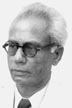
Martin Wickramasinghe
Sri Lankan writer
- Life
- May , 1890 – July 23, 1976
- Birthday
- July 23
- Field
- Art, Literature
- Length
- 2 parts
Martin Wickramasinghe, MBE (Sinhala:මාර්ටින් වික්රමසිංහ) (29 May 1890 – 23 July 1976) was a Sri Lankan novelist. His books have been translated into several languages.
The search for roots is a central theme in Wickramasinghe’s writings on the culture and life of the people of Sri Lanka. His work explored and applied modern knowledge in natural and social sciences, literature, linguistics, the arts, philosophy, education, and Buddhism and comparative religion to reach beyond the superficial emotionalism of vulgar nationalism, and guide Sri Lankan readers to the enduring roots of their common national identity that exists in the folk life and folk culture of Sri Lanka.
Honors and Awards
- Appointed Member of the Radio Broadcasting Commission – 1953
- Appointed Member of the Order of the British Empire, by Her Majesty Queen Elizabeth II in person – 1954
- Award for the best news paper article for the year "The fall of the Brahmin Class" – 1956
- The novel "Viragaya" wins the Don Pedric Award for the best novel of the year – 1957
- Awarded a Honorary PhD by the Vidyodaya University – 1960
- Awarded a DLitt by the University of Ceylon – 1963
- UNESCO Award for his book "The Rise of the Soviet Land" – 1964
- Awarded a DLitt by Vidyalankara University -1964
- Awarded a DLitt by the University of Ceylon, Colombo – 1970
- Receives the first Presidential Award for Literature – 1974
Creative writer and pioneer critic
Wickramasinghe began his literary career with the novel Leela (1914) and an anthology of essays on literary criticism, ‘Sasatriya Lekhana (1919). Shortly thereafter he began a campaign to raise literary standards for the Sinhalese reading public with work such as Sahityodaya Katha (1932), Vicara Lipi (1941), Guttila Gitaya (1943) and Sinhaa Sahitayaye Nagima (1946) in which he evaluated the traditional literally heritage according to set rules of critical criteria formed by synthesizing the best in Indian and western traditions of literary criticism.
Through the 1940s Wickramasinghe dabbled with the double role of literary critic and creative writer. Gamperaliya (1944) is widely held as the first Sinhalese novel with a serious intent that compares, in content and technique, with the great novels of modern world literature. The novel depicts the crumbling of traditional village life under the pressure of modernization. The story of a successful family in a Southern village is used to portray the gradual replacement of traditional economic and social structure of the village by commercial city influence.
Wickramasinghe followed Gamperaliya with Yuganthaya (1948) and Kaliyugaya (1957) forming a trilogy. After the decay of the traditional life, the story details the rise of the bourgeoisie, with its urban base and entrepreneurial drive, ending with the formation of the labor movement and socialist theology and rise of hopes for a new social order.
With the development of a literary criticism movement in the early-’50s, Wickramasinghe presented the works Sahitya Kalava (‘The Art of Literature’ 1950) and Kavya Vicaraya (‘The Criticism of Poetry’ 1954). He received an MBE around this time.
Wickramasinghe’s most heralded work came in 1956 with Viragaya. Due to the significance of its theme and the sophistication of its technique, the novel has come to be hailed as the greatest work of Sinhalese fiction. It follows the spiritual problems of a fragile Sinhalese youth raised in a traditional Buddhist home after being confronted with the spectre of adulthood and the responsibilities that come with it all made more complex with the modernization of society. First-person narrative is used to put forth the autobiographical story of the anti-hero in impressionistic vignettes rather than in chronological order. It is a seminal work and spawned a spew of imitators, some good on their own right.
Continue reading: part 2 of 2 →