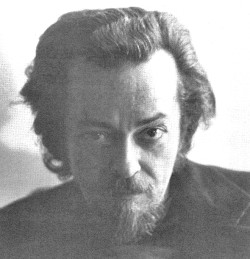
Leroy F. Aarons Part 2
American dramatist and playwright
- Life
- December 8, 1933 – November 28, 2004
- Birthday
- December 8
- Field
- Art, Literature
- Length
- 2 parts
After he left daily journalism in 1991, Aarons researched the story in depth. The result was his first book, published by HarperCollins in 1995, Prayers for Bobby: A Mother’s Coming to Terms with the Suicide of Her Gay Son. He worked to present the story to a large viewership but did not see this happen before he died. Prayers for Bobby premiered on January 24, 2009, as a Lifetime TV film starring Sigourney Weaver in her first made-for-television film.
Gay activism
In 1989 the American Society of Newspaper Editors (ASNE) asked Aarons to coordinate a first-ever survey of gay and lesbian journalists. Responses from 250 print journalists revealed that most gays and lesbians were closeted in their newsrooms. An overwhelming majority said coverage of gay issues was "at best mediocre." Fewer than 60 percent had told colleagues about their sexual orientation; fewer than 7 percent said their work environments were good for gays.
At ASNE’s national convention in 1990, Aarons presented the results. Aarons closed his speech by coming out to his peers.
Four months after his speech Aarons convened six journalists in his California dining room to launch the National Lesbian and Gay Journalists Association (NLGJA). Modeling its mission after the Maynard Institute’s, he was elected its first president, a post he held until 1997. Aarons remained on NLGJA’s board until his death in 2004. By then the organization counted 1,200 members in 24 chapters nationwide.[https://www.washblade.com/advertising/eTearsheets/12-03-2004/014.pdf Brian Moylan. Washington Blade. December 3, 2004]
On its 15th anniversary in 2006, NLGJA established the annual Leroy F. Aarons Scholarship Award for a lesbian, gay, bisexual or transgender student pursuing a journalism career. CNN provided $100,000 to fund the scholarship.
Early life
Born in Bronx, NY on Dec. 8, 1933, Roy Aarons graduated cum laude from Brown University and earned an MS from the Columbia Graduate School of Journalism. He served in the Navy and Naval Reserve, attaining the rank of lieutenant, then took a copyediting job with the New Haven Journal-Courier. The Washington Post hired him away.
Other works
In 1991 Aarons revisited the Pentagon Papers case, co-authoring a docudrama with Geoffrey Cowan, . That year it aired on National Public Radio, performed by Ed Asner and Marsha Mason. The play won the coveted Corporation for Public Broadcasting’s Gold Award for best live entertainment program on public radio. Top Secret still tours colleges nationwide as a production of LA Theatre Works.
Another of his plays, Zeke the Profane, deals with the ambivalent attitudes many Reform Jews have towards circumcision. Friends of Aarons have performed it.
Aarons wrote a full-length drama, Home Movies, a memory play in multimedia that focuses on his teenage years and his service in the U.S. Navy. Although he was able to finish the play on the day before he died, it has not yet been produced.
Notes
Work with Robert C. Maynard
In 1981 Aarons met Israeli computer consultant Joshua Boneh at his Jewish Community Center in Washington D.C. "He followed Boneh to Israel" in 1982 where he covered the Lebanon War for Time. The two celebrated their 20th anniversary with a commitment ceremony at the same JCC where they met. Aarons joined the Oakland Tribune at the behest of his former Post colleague Robert C. Maynard. Maynard had purchased the declining Tribune—thus becoming the first black owner of a major metro paper—and recruited Roy to be its features editor.
In the 1970s Aarons had joined Maynard in founding what would become the Robert C. Maynard Institute for Journalism Education (MIJE). Maynard had been working with a summer program for minority journalists at Columbia University, and he urged Aarons to join its faculty. In 1976, the program moved to the University of California, Berkeley as the Summer Program for Minority Journalists. It later became MIJE, a model program in training and supporting minority journalists.
At the Tribune, Aarons quickly rose to executive editor and then to senior vice president for news, where he worked for greater staff diversity. He led his team to a 1990 Pulitzer Prize for spot news photography of the 1989 Loma Prieta earthquake. The following year he retired from journalism.