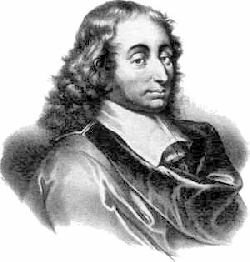
Jamal ad-Din al-Afghani Part 2
Political activist and Islamic ideologist
- Life
- 19 June 1838 - 01 September 1897
- Birthday
- June 19
- Length
- 3 parts
Among the reasons why Al-Afghani thought to have had a less than deep religious faith Kedourie, Elie Afghani and Abduh: An Essay on Religious Unbelief and Political activism in Modern Islam (1966, New York, Humanities Press) was his lack of interest in finding theologically common ground between Shia and Sunni (despite the fact that he was very interested in political unity between the two groups),Nasr, The Shia Revival, p.103
Early life and origin
He claimed to be of Afghan origin most of his life and until recently there was some difference of opinion among scholars as to whether that was the case. Although claimed by some older sources that al-Afghan was born in a district of Kunar Province in Afghanistan which is also called Asadabad,From Reform to Revolution, Louay Safi, Intellectual Discourse 1995, Vol. 3, No. 1 Historia, Le vent de la révolte souffle au Caire, Baudouin Eschapasse, - a claim that was supported by scholars like Ignaz Goldziher and J. Jomier who noted that he spent his childhood and adolescence in Afghanistan, although asserted otherwise in some Shi'i writings - evidence analysed by Nikki Keddie shows that he was in fact born in Iran. Overwhelming documentation (especially a collection of papers left in Iran upon his expulsion in 1891) now proves that he was born in the village of Asadābād, near the city of Hamadān in western Iran into a family of Sayyids. Records indicate that he spent his childhood in Iran and was brought up as a Shi'a Muslim. According to evidence reviewed by Nikki Keddie, he was educated first at home then taken by his father for further education to Qazvin, to Tehran, and finally, while he was still a youth, to the Shi'a shrine cities in Iraq. It is thought that followers of Shia revivalist Shaikh Ahmad Ahsa'i had an influence on him.Edward Mortimer, Faith and Power, Vintage, (1982)p.110 An ethnic Afghan, al-Afghan claimed to be an Afghan in order to present himself as a Sunni Muslim and escape oppression by the Iranian ruler Nāṣer ud-Dīn Shāh. One of his main rivals, the sheikh Abū l-Hudā, called him Mutaʾafghin ("the one who claims to be Afghan") and tried to expose his Shia roots.A. Hourani: Arabic Thought in the Liberal Age 1798–1939. London, Oxford University Press, p. 103–129 (108) Other names adopted by Al-Afghani were al-Kābulī ("[the one] from Kabul") and al-Istānbulī ("[the one] from Istanbul"). Especially in his writings published in Afghanistan, he also used the pseudonym ar-Rūmī ("the Roman" or "the Anatolian").
Political activism
At the age of 17 or 18 in 1855–56, Al-Afghani travelled to British India and spent a number of years there studying religions. In 1859, a British spy reported that Al-Afghani was a possible Russian agent. The British representatives reported that he wore traditional cloths of Noghai Turks in Central Asia and spoke Dari, Arabic and Turkish language fluently.Molefi K. Asante, Culture and customs of Egypt, Published by Greenwood Publishing Group, 2002, ISBN 0-313-31740-2, ISBN 978-0-313-31740-8, Page 137 After this first Indian tour, he decided to perform Hajj or pilgrimage at Mecca. His first documents are dated from Autumn of 1865, where he mentions leaving the "revered place" (makān-i musharraf) and arriving in Tehran around mid-December of the same year. In the spring of 1866 he left Iran for Afghanistan, passing through Mashad and Herat.
He was spotted in Afghanistan in 1866 and spent time in Qandahar, Ghazni, and Kabul. He became a counsellor to the King Dost Mohammad Khan (who died, however, on June 9, 1863) and later to Mohammad Azam. At that time he encouraged the king to oppose the British but turn to the Russians. However, he did not encourage Mohammad Azam to any reformist ideologies that later were attributed to Al-Afghani. Reports from the colonial British Indian and Afghan government stated that he was a stranger in Afghanistan, and spoke the Dari language with Iranian accent and followed European lifestyle more than that of Muslims, not observing Ramadan or other Muslim rites. In 1868, the throne of Kabul was occupied by Sher Ali Khan, and Al-Afghani was forced to leave the country.
Continue reading: part 3 of 3 →