Gary Kildall
Computer scientist and entrepreneur
- Life
- May 19, 1942 - July 11, 1994
- Birthday
- May 19
- Length
- 3 parts
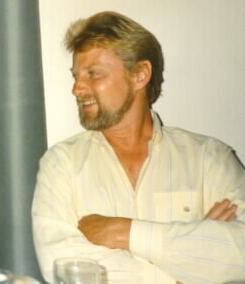
Gary Arlen Kildall (May 19, 1942 – July 11, 1994) was an American computer scientist and microcomputer entrepreneur who created the CP/M operating system and founded Digital Research, Inc. (DRI). Kildall was one of the first people to see microprocessors as fully capable computers rather than equipment controllers and to organize a company around this concept. He also co-hosted the PBS TV show The Computer Chronicles. Although his career in computing spanned more than two decades, he is mainly remembered in connection with IBM's unsuccessful attempt in 1980 to license CP/M for the IBM PC.
Personal life
Kildall's colleagues recall him as creative, easygoing, and adventurous. In addition to flying, he loved sports cars, auto racing, and boating, and he had a lifelong love of the sea.
Although Kildall preferred to leave the IBM affair in the past and to be known for his work before and afterward, he continually faced comparisons between himself and Bill Gates as well as fading memories of his contributions. A legend grew around the fateful IBM-DRI meeting (encouraged by Gates and various journalists), suggesting that Kildall had irresponsibly taken the day off for a recreational flight, and he tired of constantly having to refute that story. In later years, he had occasional private expressions of bitterness over being upstaged by Microsoft.
Kildall was particularly annoyed when the University of Washington asked him, as a distinguished graduate, to attend their computer science program anniversary in 1992, but gave the keynote speech to Gates, a dropout from Harvard. In response he started writing his memoir, Computer Connections. The memoir, which he distributed only to a few friends, expressed his frustration that people did not seem to value elegance in software, and it said of Gates, "He is divisive. He is manipulative. He is a user. He has taken much from me and the industry." In an appendix he called DOS "plain and simple theft" because its first 26 system calls worked the same as CP/M's.
He accused IBM of contriving the price difference between PC DOS and CP/M-86 in order to marginalize CP/M.
Harold Evans used the memoir as a source for a chapter about Kildall in the 2004 book They Made America, concluding that Microsoft had robbed Kildall of his inventions. IBM veterans from the PC project disputed the book's description of events, and Microsoft described it as "one-sided and inaccurate."
Selling DRI to Novell had made Kildall a wealthy man, and he moved to the West Lake Hills suburb of Austin. His Austin house was a lakeside property, with stalls for several sports cars, plus a video studio in the basement. Kildall owned and flew his own Learjet private jet airplane and had at least one boat on the lake. While in Austin he also participated in volunteer efforts to assist children with HIV/AIDS. He owned a mansion with a panoramic ocean view in Pebble Beach, California, near the headquarters of DRI.
Notes
Business career
CP/M
Kildall and his wife Dorothy established a company, originally called "Intergalactic Digital Research" (later renamed as Digital Research, Inc), to market CP/M through advertisements in hobbyist magazines. Digital Research licensed CP/M for the IMSAI 8080, a popular clone of the Altair 8800. As more manufacturers licensed CP/M, it became a de facto standard and had to support an increasing number of hardware variations. In response, Kildall pioneered the concept of a BIOS, a set of simple programs stored in the computer hardware which enabled CP/M to run on different systems without modification.
CP/M's quick success took Kildall by surprise, and he was slow to update it for high density floppy disks and hard disks. After hardware manufacturers talked about creating a rival operating system, Kildall started a rush project to develop CP/M 2. By 1981, at the peak of its popularity, CP/M ran on 3,000 different computer models and DRI had $5.4 million in yearly revenues.
Continue reading: part 2 of 3 →